Sept. 29, 2025
A career in the arts and humanities helps us explore the culture and history around us. At its core, it’s about our collective humanity and how we find meaning in our everyday lives and what connects us all.
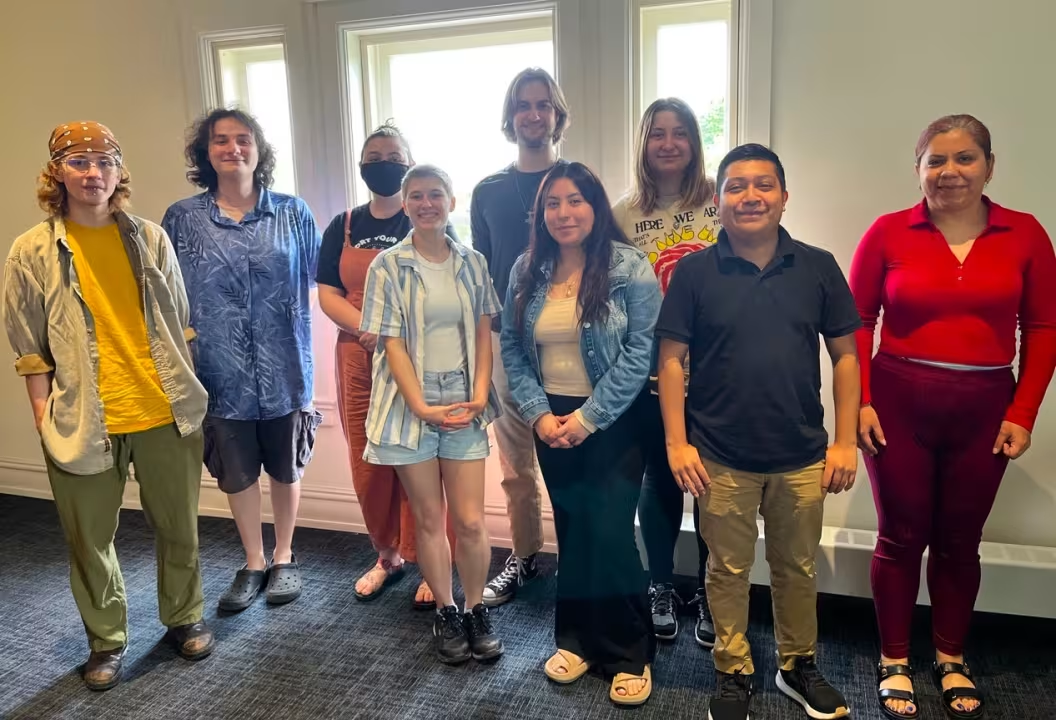
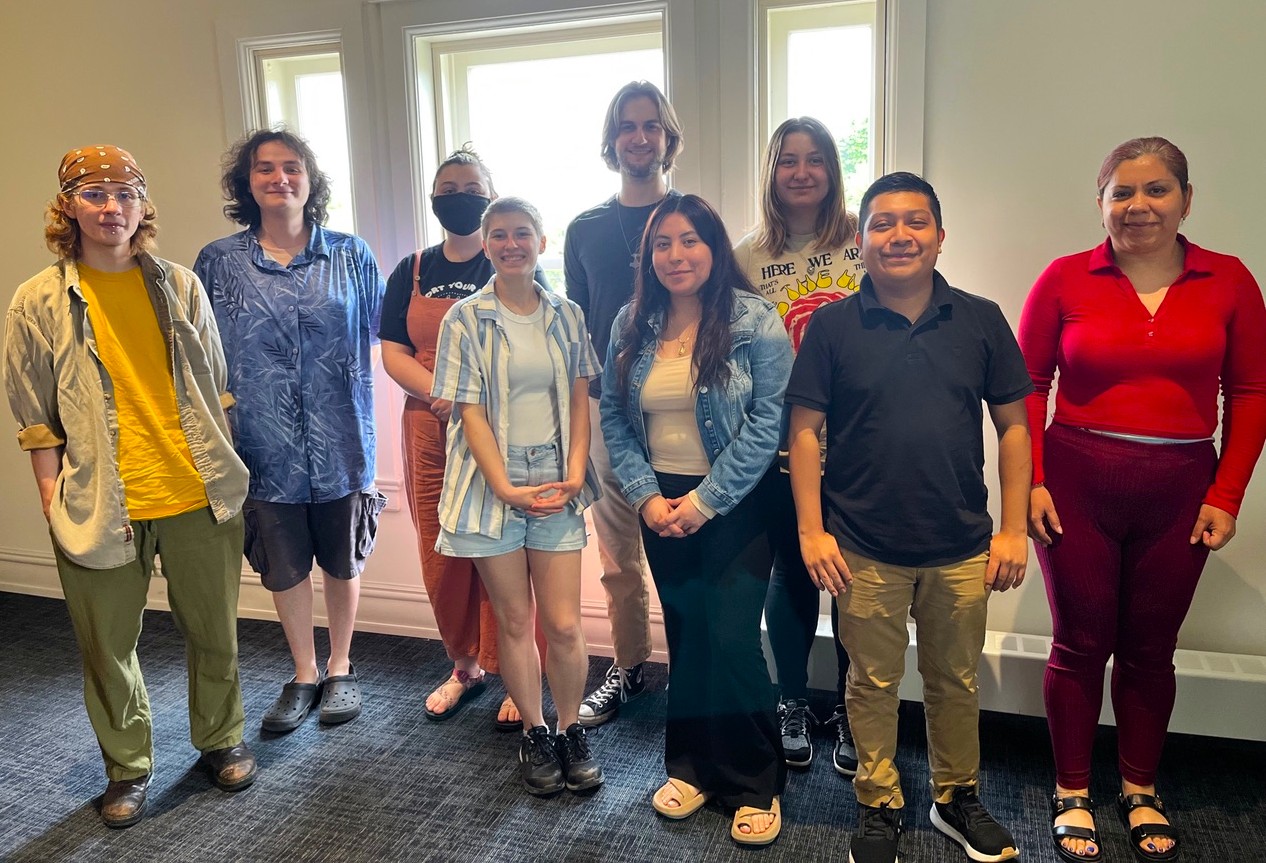
Through the Culture Corps program, Grand Rapids Community College (GRCC) students gain first-hand experience in this field through paid internships with local arts and culture organizations. Thanks to a generous grant from the Mellon Foundation, and in partnership with the University of Michigan Arts Initiative, GRCC connected nine students with Grand Rapids-based arts and culture organizations this summer to dive deeper into what a humanities-focused career can look like.
“These students have the talent,” said Leanne Challa, program manager for Transfer Bridges, University of Michigan and GRCC’s contact for Culture Corps. “Culture Corps created a bridge for us to take that talent and add it to the experience of a paid internship. This partnership provides students a strong understanding of what to expect if they pursue a career in the arts and humanities sector. They gain confidence in themselves while learning you don’t have to be an artist to work within the field. You can have a business degree and find a space in the arts and humanities that benefits from what you offer.”
Paid, Professional and Purposeful
One of the biggest benefits for the students is compensation: $18 per hour plus transportation reimbursement. Funding is provided directly to the students from the University of Michigan, allowing the host organizations to focus mentorship rather than managing budgets. Each organization also receives a stipend. It’s a win-win for the students and the organizations.
Two of this year’s interns, Ella Johnson and Ethan Tappan, worked at Grandville Avenue Art & Humanities (GAAH), a nonprofit serving the Roosevelt Park and Black Hills neighborhoods. Their supervisor, Chief Operating Officer Alex Kuiper, sees the program as an eye-opener for students.
“Often people don’t realize when they go into the arts fields, there’s other opportunities besides being a professional artist or musician,” Kuiper said. “There are organizations like ours that are nonprofit. While we work directly with the arts, our primary mission is to serve our neighbors. We jumped at the chance to host another two interns this summer. It has been an incredible experience and we look forward to continuing to participate.”
Eye-Opening Internships
Johnson said the experience helped shift their perspective.
“Interning through Culture Corps is a really good way to see the different facets of the humanities,” Johnson said. “This experience shifted my perspective to see how open and welcoming this space is, especially with GAAH and how they operate. Working with them has been really eye opening in a great way.”
Initially interested in astronomy and science, Johnson now sees the value in taking an interdisciplinary approach that includes the arts and humanities.
Tappan has long been interested in humanities.
“I’m studying English literature and want to add a philosophy minor to that,” Tappan said. “I’ve known I want to go into education in some capacity. My internship experience at GAAH gave me a lot of insight on what different jobs can look like in this space. I used to immediately think public education was the only direction. But learning is so much broader, and getting to see it in action in real time was really incredible.”
Real Projects, Real Skills
Culture Corps internships are designed to ensure students participate in meaningful projects that allow for skill-building and reflection. At GAAH, this included working directly with students in their summer youth programs.
“We tend to focus on the technical aspects of jobs and often forget to consider the soft skills we need,” said Kuiper. “In our context, that really came into light since the arts and humanities are just a small part of what we do. The greater part is how we care for our neighbors as well as bring a sense of belonging for them. One thing our interns really jumped into this summer was leading our opening circles with our students. They planned and led the ice breakers. They managed 50 different K-8 students and were fantastic.”
The structure of the program also impressed students.
“I think part of why we’ve all had an amazing experience is in how the program is set up,” Tappan said. “The University of Michigan and GRCC do a great job of setting the expectations for everyone involved. It makes it so we can all work freely within the roles established for us.”
Building Futures and Relationships
For organizations like GAAH, the impact extends well beyond the internship period.
“You know you’ve created something special when you have a lasting relationship with the interns after their time in the program has ended,” Kuiper said, reflecting on the previous year’s experience.
Any GRCC student interested in seeing where they might fit into the world of arts and humanities is encouraged to apply for Culture Corps.
“There’s space for everyone in the humanities,” Kuiper said. “We hope to show by example that the creative process is understanding that there really isn’t such a thing as a mistake or a failure, but more a step to continue to make something beautiful. An internship in the arts and humanities really celebrates that more than other spaces.”
Learn about the Culture Corps program at GRCC
This story was reported by Anjula Caldwell.