Feb. 27, 2026
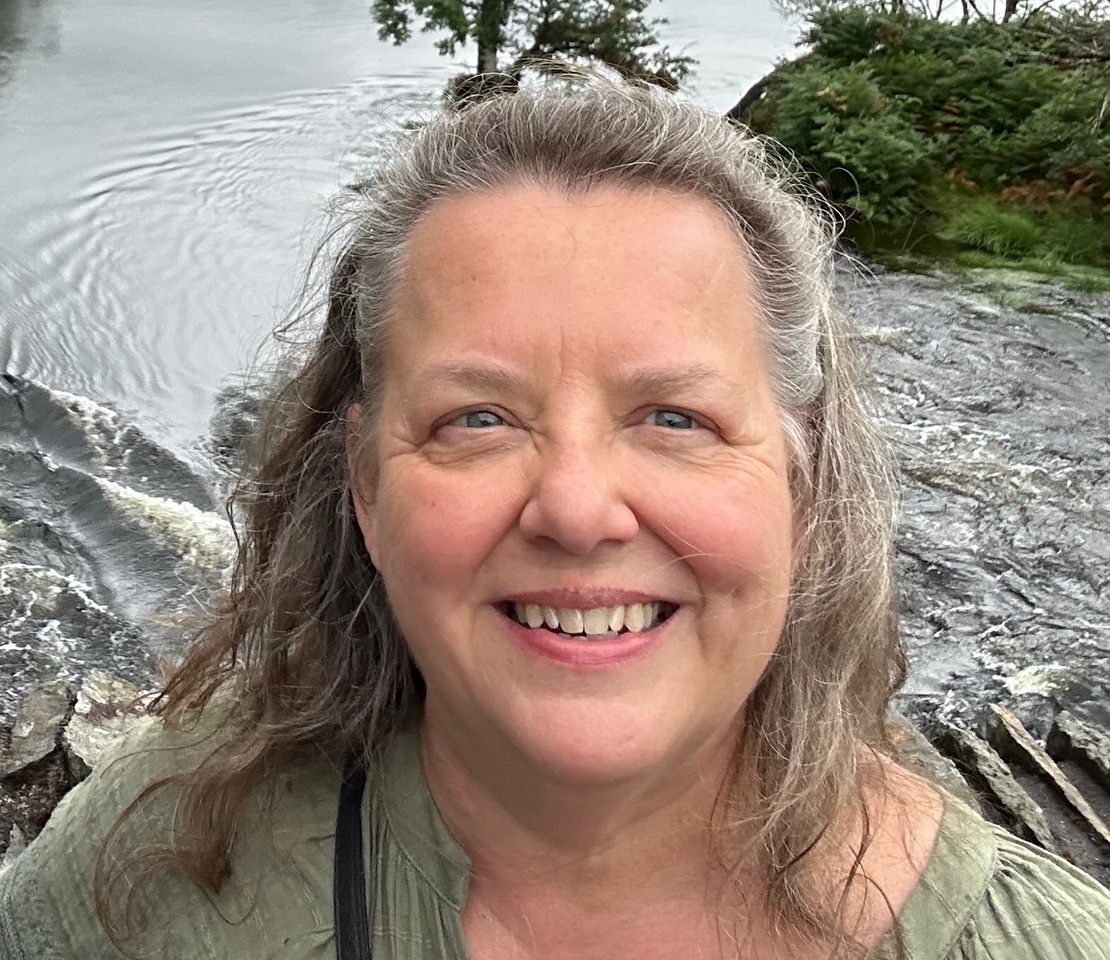
For nearly two decades, adjunct professor Tamera Detrick has taught in the Language and Thought Department at Grand Rapids Community College (GRCC). Over that time, she has watched classrooms shift with changes in technology, politics and cultural approaches to understanding humanity. Through it all, she has kept one focus at the center of her philosophy: people.
“I went into the humanities for practical reasons,” Detrick said. “I stay in the humanities because I can’t imagine a world that doesn’t utilize that knowledge. It’s right where humans live. It’s right there in the name.”
Keeping Humans at the Center
Detrick teaches full time at GRCC, leading courses such as Civilizations and Culture, World Religions and Introduction to Humanities. She draws from books, online sources and videos, encouraging students to think critically while emphasizing reading as a lifelong tool.
“Humanities touches everything,” Detrick said. “If you focus only on philosophy, you forget why it matters for people who aren’t going to be philosophers. If you focus only on religions, you can end up debating whether one is right or wrong instead of asking how to keep religion from becoming divisive. Humanities covers all of it. It shows why reading is still important and how it continues to develop the brain, even as we get older.”
From the start of her career, Detrick set her sights on teaching at the college level. At GRCC, she said, she found more than she expected.
“I really enjoy teaching in the community college system,” Detrick said. “We have a good balance of holding students accountable and remaining flexible. Our current climate of thinking tends to be either good or evil, right or wrong. But there’s a sea of gray that our culture is not teaching students. Here at GRCC, we try to provide that in our classrooms.”
She said today’s culture often encourages division.
“If someone doesn’t think exactly like you, it feels like the culture says to cut them off,” Detrick said. “If someone doesn’t worship like you or look like you, then be afraid. We’ve got to help our community accept the concept of community. I think our classes do a good job of that. I’m proud to be part of GRCC.”
Exploring Complex Topics
In a tense social climate, Detrick hopes her classroom is a space where complex topics are explored without losing sight of unity. She uses the college’s learning management system, Canvas, and keeps her curriculum flexible. Rather than rushing through material, she prioritizes depth.
“I’d rather go deep than wide,” Detrick said. “I’m willing to leave some information out and adjust my tests so they match what we’ve covered. I want to make space for us to ask, ‘What just happened there?’ instead of passively moving on.”
She also challenges students to take ownership of their lives and thinking.
“Your life is going to start and it’s going to finish,” she said. “Your mind is yours. Are you going to be passive, or are you going to get active in your own life? I try to model good thinking behaviors and give students the objectives to support that.”
Building In Compassion and Empathy
Detrick’s 16-year tenure reflects her commitment to the humanities and their impact on future leaders. She said the discipline builds compassion and empathy by helping students recognize both differences and shared needs.
“I hope students realize our baseline is coming from the same place,” Detrick said. “At our core, people are the same. We have the same needs and concerns. We’re all human beings. That’s the concept of humanities — to be humane. What makes us human, and what makes us a good person? Is it following rules, or is it being kind? I hope students leave my classroom understanding that we’re all human, hoping for the same basic needs.”
In a world where conflict and apathy can overshadow understanding, Detrick sees education as foundational. She encourages curiosity, critical thinking and acceptance of others. While students enter her classroom as individuals, she hopes they leave shaped by shared learning.
“All that comes from the study of humanities,” Detrick said. “We need to stop the knee-jerk reaction to a new idea or an old idea brought back to the front. Socrates said the unexamined life is not worth living. Epicurus said there are three things you need for happiness: friends, financial freedom and self-evaluation. Everything is about evaluating ourselves. You can always choose kindness and compassion, and that is never the wrong choice.”
A lack of self-exploration, she said, can lead to a lack of compassion.
“Some people are going to come to a different answer than you, but compassion should drive that interaction,” Detrick said. “Try to understand first. The defining part of being human is protecting the humanness not only of ourselves, but of others.”
Each semester, Detrick teaches a variety of humanities classes, reaching about 120 students. Her goal is to challenge them to think independently and to choose to be humane.
“My students have become my hope for our future,” she said.
Educators like Detrick make GRCC a place of growth and hope for us all.
Visit the Language and Thought Department web page to learn more about programs and areas of study.
This story was reported by Anjula Caldwell.