Nov. 12, 2026
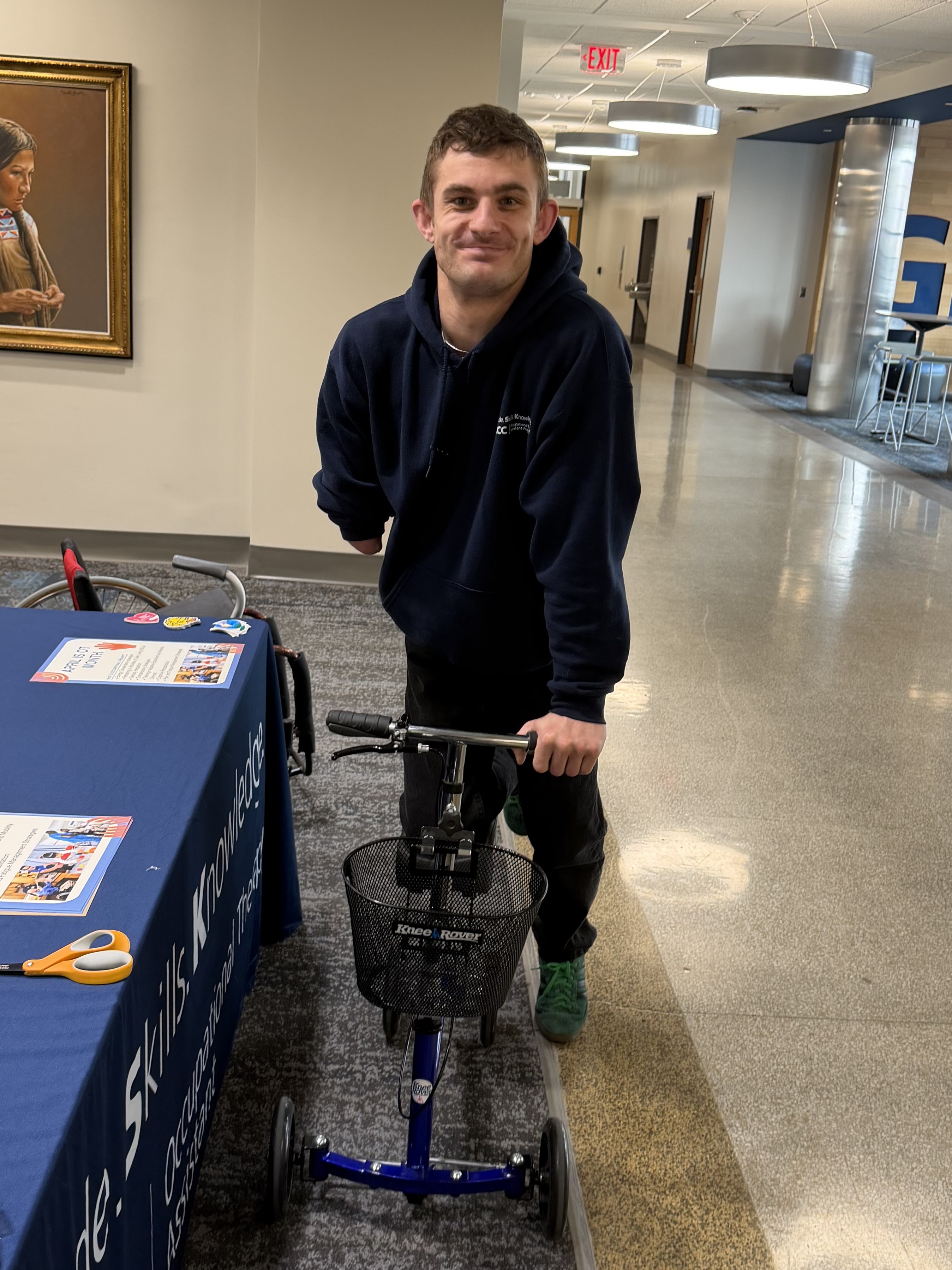
Meet Chris Back, a student in GRCC’s Occupational Therapy Assistant program. He wants to use his education to help future patients and clients live a better life.
Chris is also a student with a congenital upper limb difference. When he started the program, he was unsure of how he would do in class and what his educational journey would look like.
Born without his right hand and most of his right forearm, Chris has navigated most of his life without a prosthesis. He remembers talking with Assistant Professor Robin Pegg and Program Director Matthew Mekkes about his concerns. “They were very supportive,” said Back. “To them, there was never a question of whether or not I could do something. They stayed focused on finding ways for me to succeed rather than fixating on what I might not be able to do.”
Learning, Adaption and Growth
This supportive environment from faculty and peers helped give Chris confidence to persist in the program. The physical demands of the program required some creative problem solving.
One example was putting on personal protective equipment (PPE) like gowns, masks and gloves. The items must be put on in a specific order to ensure a proper fit and prevent contamination. The standard procedure assumes the use of two hands.
“I knew in my head that I would have to figure out a different way, and that scared me because healthcare settings have particular requirements,” said Back. “How was I going to follow the particular order of steps? I talked with the instructors and they reassured me from the get go.”
In another instance, Chris and faculty worked to figure out how Chris was going to hold and support a baby during the pediatrics coursework. They collaborated and found a successful solution in real time. It was Chris’s first time holding a baby, which made the moment all the more special.
Rather than treating Chris’s differences as barriers, faculty worked with him on physical adaptations and alternative ways of accomplishing required tasks.
“The solution-focused mindset has given me a lot of confidence,” said Back. “I never felt like expectations were being lowered just for me. Instead, we found ways to adapt, which has helped me grow my confidence.”
Supporting Student Success Through Inclusive Instruction
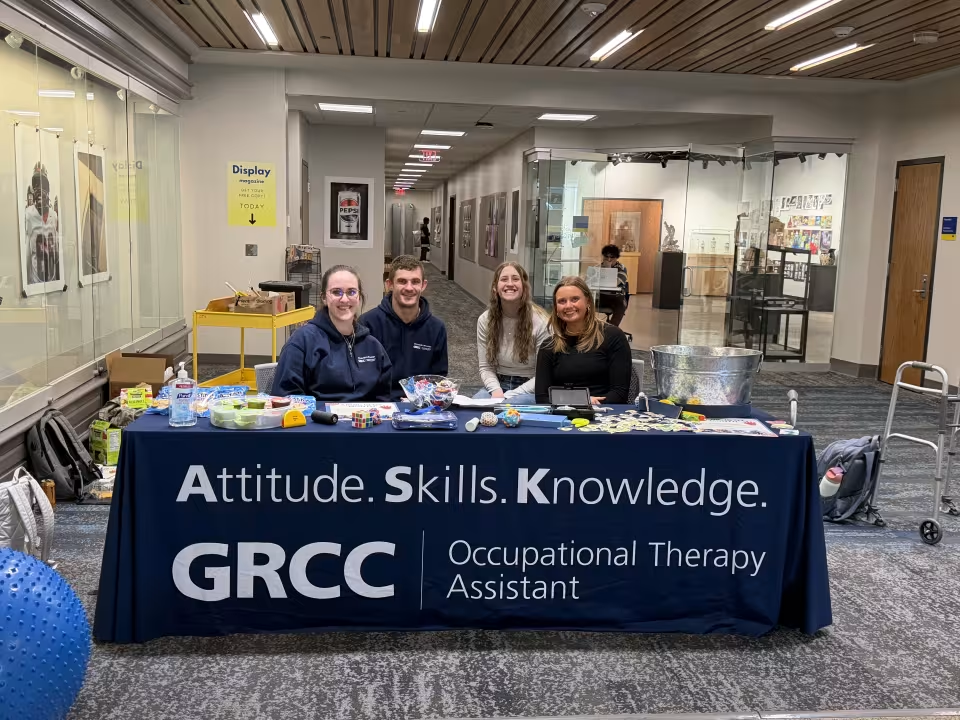
Chris's story illustrates how an inclusive educational environment can support students with differing abilities through individualized approaches, meaningful relationships and a shared commitment to removing barriers to participation.
“Our field needs a Chris Back,” said Robin Pegg. “As much as diversity is important everywhere, it is so important in therapy. When people with disabilities see people with disabilities doing things they didn't think they would be able to do after their injury or diagnoses, it brings hope. Everyone needs hope.”
Visit the Occupational Therapy Assistant web page to learn more about the program, courses and career opportunities.