March 13, 2026
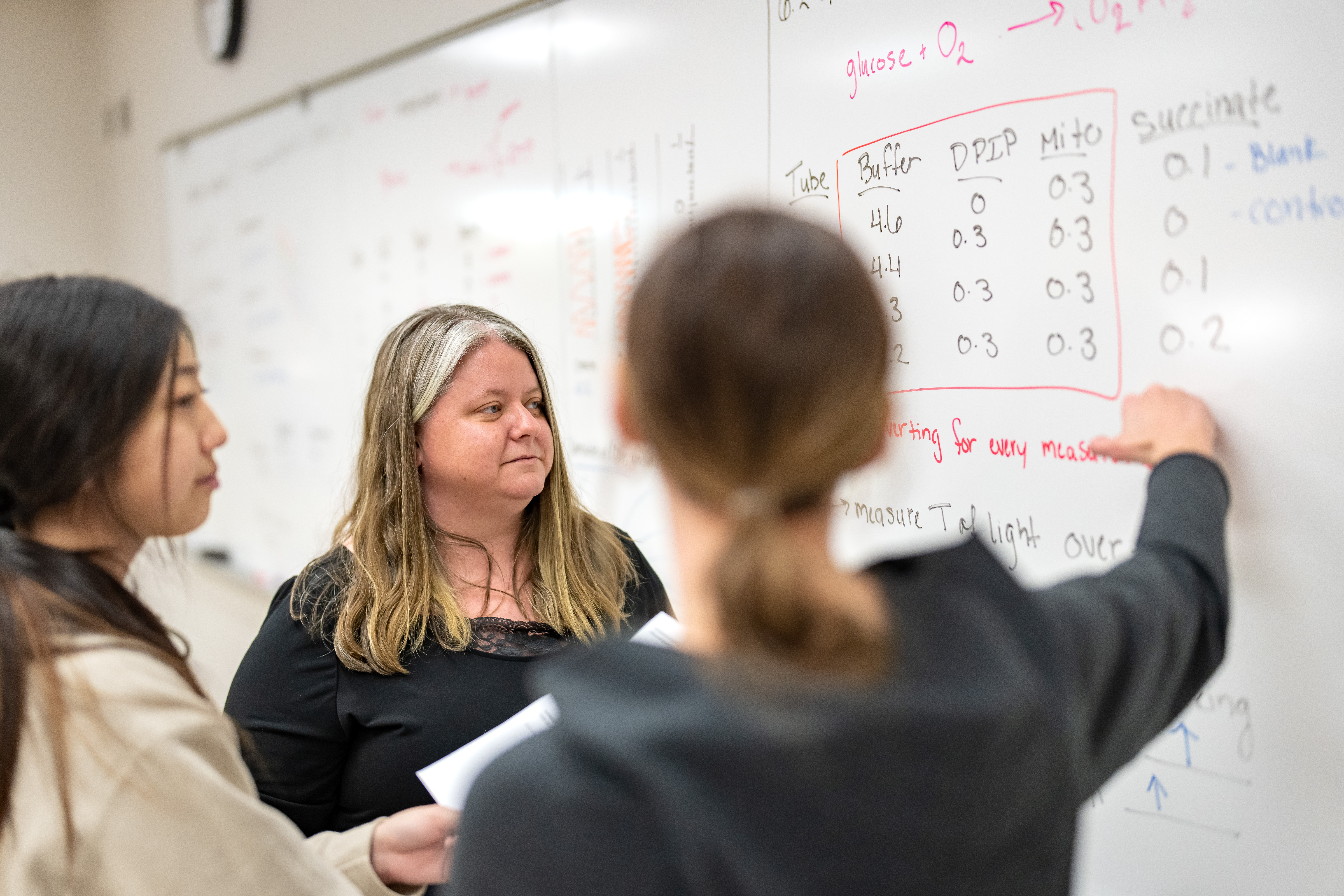
Grand Rapids Community College (GRCC) is an open-access college committed to the educational success of all students. Ensuring her classroom represented the same understanding, assistant professor Niki Evans worked to make her biology lab an accessible space for any student enrolled in her lab.
“I focused on two things,” Dr. Evans said. “One was accessibility for deaf and hard-of-hearing students and the second was for students who are blind or have low vision. Obviously, there are other things going on with inclusive labs and accessibility, but that was the main focus this time around.”
Creating Accessible Lab Tools
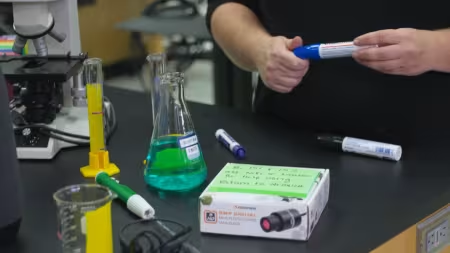
Dr. Evans wanted students of all abilities to use the basic tools required in a biology lab. When she searched for adaptive tools, she quickly discovered they were not widely available. To create a more inclusive lab environment, Dr. Evans began developing solutions herself.
Through research and experimentation, she found ways to adapt common lab tools for students with visual impairments.
“A lot of biology-based tools are incredibly visual in terms of how they’re used,” Dr. Evans said. “We’re measuring mass on a scale or liquid volumes with things like beakers and graduated pipettes. It was important to me that any student could use the tools that are central to how biology is done. I had to come up with tactile ways to use that equipment.”
One solution was increasing contrast and adding tactile markers.
“That meant putting tape behind the numbers on a beaker or making notches in a syringe where you need to fill the liquid,” Dr. Evans said. “That way there’s a limit you can feel instead of relying on seeing the line. We also labeled test tubes with colored wax strips instead of numbers.”
Using Technology To Support Interpretation
Dr. Evans also worked to support students who rely on American Sign Language interpretation. Because of a shortage of interpreters available in person, she collaborated with GRCC’s media team to create a system that allowed interpreters to join the lab virtually.
Televisions and media headsets were installed so Dr. Evans’ lectures could be broadcast to interpreters working remotely. The system required testing before it was used in class.
“We did mock scenarios beforehand to make sure everything worked,” Dr. Evans said. “After every lab, I provided feedback about what worked and what didn’t. That gave us space to adjust and anticipate changes we might need for more complex labs, like presentations.”
Dr. Evans said the project required collaboration across campus.
“It was a huge team effort,” she said. “I had someone from my department who knew biology, people from Disability Support Services with accessibility expertise and the media team to help implement the ideas.”
Accessibility Beyond The Lab
Dr. Evans extended accessibility practices beyond lab sessions. She converted pre-lab video captions into a written, textbook-style format and provided both options to every student.
“When you think about universal design, you can see how it helps multiple students, not just the ones you originally created it for,” Dr. Evans said. “Every student got the video and the textbook-style version and could choose which one worked best.”
She said many students appreciated having the choice.
“I know about universal design and multiple formats, but seeing students respond to it was motivating to continue,” Dr. Evans said.
Designing A Class For Every Student
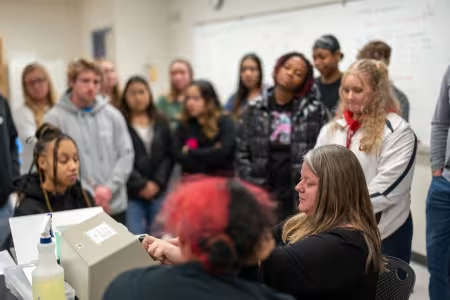
GRCC’s mission as an open-access college shaped Dr. Evans’ approach to designing her course.
“We say any student can come here and any student can apply to college,” Dr. Evans said. “To me, that means any student can take my class. That’s something I should expect when designing my class and course materials.”
Dr. Evans said she has been impressed by the resources available at GRCC to support students.
“This isn’t the first college where I’ve worked,” she said. “We have a lot of resources here. Students who might feel uncertain about education can come here and know they’ll be seen.”
She said the college supported many of her ideas for improving accessibility in the lab.
“Almost any idea I had, the school was willing to support me in making the lab accessible,” Dr. Evans said. “It was empowering for all of us.”
Preparing Students For The Future
Creating an accessible lab also helps students understand how to advocate for their needs beyond college.
“You’re helping students learn how to walk into the workplace and ask for what they need,” Dr. Evans said. “I’ve had students tell me they didn’t think they’d be able to use the equipment. Now they’re happy to be able to do it and have tools they can take into the future.”
Dr. Evans hopes students carry that confidence into future classes and careers.
“I hope they can go forward to another class, or a job, and not only know they can do it, but advocate for what they need,” she said.
A New Appreciation For The Lab
Dr. Evans said the process of adapting equipment also changed how she and her students think about lab work.
“The greatest gift was how making the lab accessible made me and the students appreciate the lab a little more,” she said.
Adapting tools required students to think more deeply about how the equipment works and why it is used.
“When you have to find another way to use them, it makes you reflect on the purpose of the tool,” Dr. Evans said. “I think the process helped everyone appreciate something we hadn’t thought about before.”
Visit the Biological Sciences department web page to learn more about programs and areas of study.
This story was reported by Anjula Caldwell.