May 8, 2026
Grand Rapids Community College’s (GRCC) Occupational Therapy Assistant (OTA) program has achieved a milestone for the third consecutive year: every student who took the national certification exam passed, qualifying them for credentialing and licensure in all 50 states.
The result reflects a program built on hands-on learning, real-world experience and a focus on developing clinical reasoning. Faculty say that approach equips students not only to pass the exam, but to enter the workforce with confidence.
Hands-on Training Drives Success
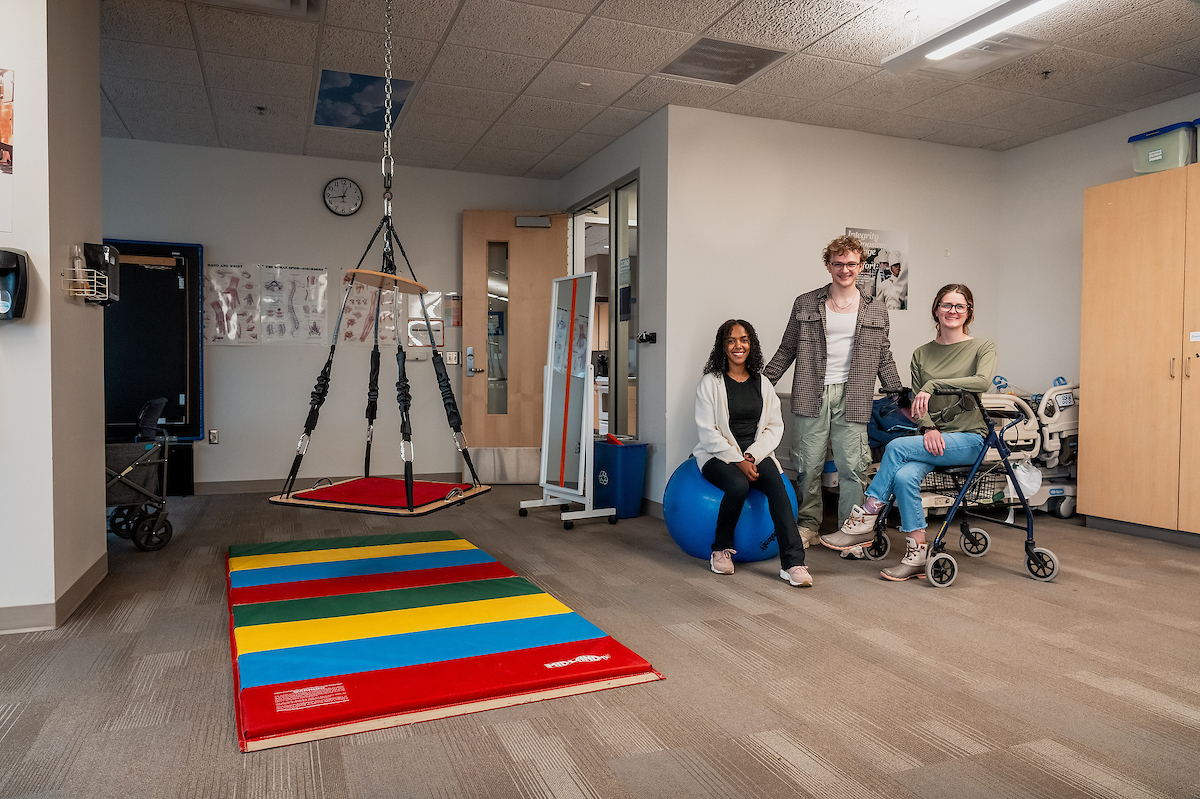
The program emphasizes experiential learning from the start. Students complete five fieldwork experiences across a range of practice settings, reinforcing classroom instruction with direct patient care.
“I think a lot of the success for our students when it comes to the board exam is they have five different fieldwork experiences and they’re in a wide variety of different practice settings,” said Matthew Mekkes, OTA program director. “By the time our students are taking the board exam, they have what they need to do well.”
Mekkes said the combination of lab-based instruction and diverse clinical placements prepares students for both the exam and professional practice.
A Legacy Of Mentorship
Established in 1979, the program benefits from a long-standing network of alumni working in the field. Many graduates now serve as clinical supervisors, creating a built-in mentorship pipeline for current students.
“We have over 75 clinical contracts in place,” Mekkes said. “Being able to place our current students with our former students is hugely helpful.”
Some alumni have spent decades in the profession and understand the program’s expectations, he said. That familiarity helps bridge the transition from student to practitioner.
Faculty Rooted In the Profession
Program faculty continue to work as occupational therapy practitioners, bringing current industry experience into the classroom.
“We’re not teaching about something we used to do years ago,” Mekkes said. “We all have active practices where we’re working within our specialties.”
That perspective shapes a curriculum focused on real-world application. In addition to required fieldwork, students complete projects with clients before entering clinical placements — an approach Mekkes said is uncommon.
Learning To Think, Not Memorize
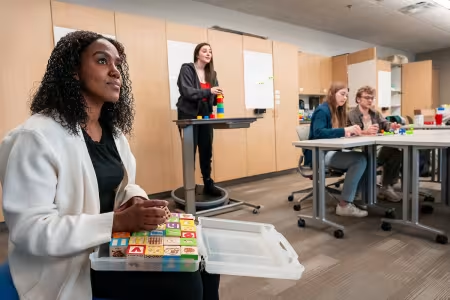
The program prioritizes competency-based education, emphasizing skill demonstration over traditional academic assignments.
“It’s one thing to write about what you know and another to demonstrate it when you have someone in front of you,” Mekkes said.
Students progressively build independence as they move through the program, supported by structured practice and feedback. By the time they reach the certification exam, faculty say, they are relying less on memorization and more on clinical judgment.
“You can’t really study for the exam,” Mekkes said. “You review what you’ve learned along the way. It’s less about memorizing information and more about a way of thinking.”
He described the exam as a test of higher-level cognitive skills — evaluating whether students can determine appropriate actions in real-world scenarios.
Support Inside And Outside The Classroom
The college provides additional resources to support student success, including free tutoring from a program graduate who is a licensed OTA.
Faculty also emphasize collaboration among students, whose varied backgrounds contribute to the learning environment.
“The diversity of our students, both in age and experience, is a strength,” Mekkes said. “Students have the opportunity to learn from others in different life stages and circumstances.”
That diversity, he said, helps create a more dynamic and supportive classroom experience.
A Culture Focused On Growth
The program intentionally fosters an environment where students can build confidence over time, even if they begin the program uncertain of their abilities.
“We work really hard as a faculty group to create a culture where it’s OK to feel unprepared at first,” Mekkes said.
He encourages students to view challenges as part of the learning process, reframing failure as an early step toward mastery.
“It’s about becoming comfortable with the power of ‘not yet,’” he said. “We talk about failing being your first attempt at learning. It’s about normalizing it and staying in that growth zone when you encounter something hard. We want students to learn to lean into that discomfort. That’s when learning occurs. We’re here to support you in that space. We're here to provide feedback that is helpful and also encouraging.”
Strong Outcomes And Open Access
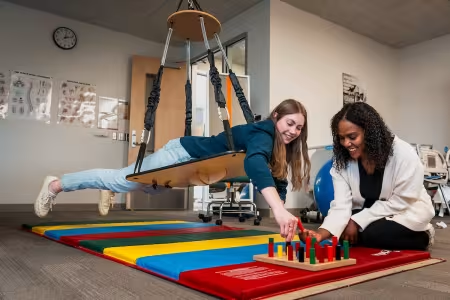
GRCC’s OTA program is open enrollment, with no waitlist or competitive admissions process. Students who meet the requirements are eligible to enroll.
About 85% of students who begin the program complete it, with many securing employment before graduation. With continued demand for occupational therapy assistants, graduates are well-positioned to enter the field.
“The job market continues to be strong,” Mekkes said. “There are opportunities to immediately get into the program and immediately get to work once you complete it.”
Preparing Students — And Future Practitioners
The program’s emphasis on critical thinking and supportive learning reflects the profession’s focus on helping patients regain independence.
Faculty at GRCC model that same approach, combining clinical reasoning with a sense of optimism that occupational therapy assistants bring to patient care. In doing so, they prepare students not only to serve others, but to understand the value of that support firsthand.
As a result, graduates enter the field ready to provide intentional, patient-centered care — backed by a perfect pass rate.
With a third consecutive year of 100% exam results, the program continues to show that its approach — grounded in experience, mentorship and clinical reasoning — produces graduates ready to succeed.
Visit the Occupational Therapy Assistant program web page to learn more about courses and admission requirements.
This story was reported by Anjula Caldwell.