March 17, 2026
Do you attend college to prepare for a job, or do you attend college to prepare for collaborating with and living among your peers and in your community?
That’s not a trick question, and the answer can be “yes” on both counts. According to Michael Schavey, director of the Center for High-Impact Experiences, both are important.
“Quality post-secondary education provides opportunities for students to engage in their communities, build learning cohorts, travel abroad and do other things that help them learn skills over and above what they absorb through curriculum,” Schavey said.
“National research shows that students who participate in these kinds of programs are more likely to persist with their education and earn a degree. I’m passionate about this work and believe that all students should have these experiences. They transform community college from a collection of courses into a place of exploration, collaboration, and growth.”
As with so many things, GRCC is in a league of its own in this area.
Curating Impactful Learning Opportunities
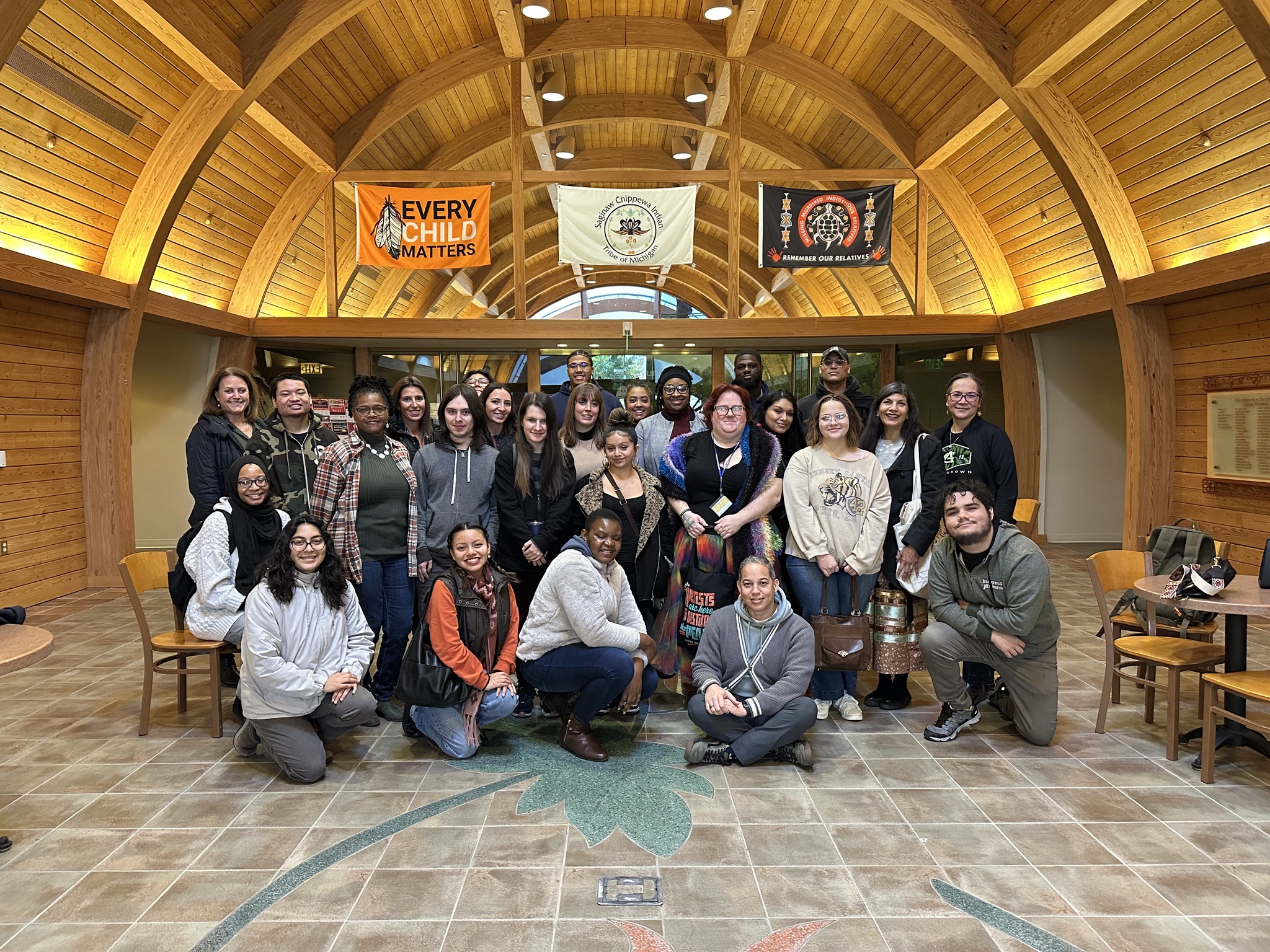
GRCC started formally investing in such programs in 2011 by developing the Experiential Learning Department. The recent name represents more than just semantics.
“It’s unprecedented in the community college world to centralize these kinds of experiences in one place,” Shavey said. “We’ve changed the name, but also invested in the administrative structure to support a wide variety of student learning opportunities. We’re also making it easier for students to research and access them.”
So what kinds of experiences are part of the expanded Center?
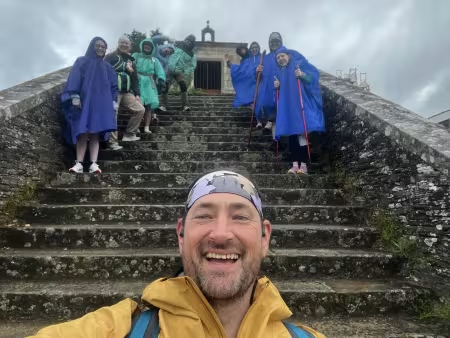
“I’m really excited about several new options for students,” Shavey said. “For example, we are introducing alternative spring break. As the name implies, it allows students to do something different during their break, traveling together and volunteering either domestically or abroad. For the upcoming fall semester, we’re launching an exciting curriculum addition called learning communities. Teams of two professors will embrace a theme and design shared assignments that bridge learning in both disciplines. Students will take both courses and learn together, like a mini-cohort. We’re expanding our undergrad research opportunities, both internally and with well-respected institutions such as University of Michigan.”
These opportunities, and many more, await students who engage with the Center.
“We have a wide variety of options, depending on what you want to do,” Shavey said. “You can find ways to travel, or engage with your community through volunteering. You can join national organizations through the Honors program, or explore your next steps through research. We’ve curated opportunities that can fit any student’s needs. I would like every student to be as intentional about finding extra- or co-curricular opportunities as they are about selecting classes.”
Sharing Accomplishments in April’s Student Showcase
If you want to get a sense for what some of these opportunities look like, make plans to attend the first Student Showcase on April 17 from noon-3 p.m. at the Wisner-Bottrall Applied Technology Center.
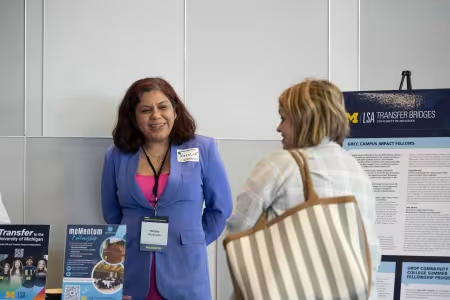
“We’re inviting students who have participated in our programs to share their accomplishments and learning through this Student Showcase,” Shavey said. “This event highlights what happens when students engage deeply in their learning. It provides a public platform for students to share research, service, leadership and creative work — reinforcing that high-impact learning is both rigorous and visible. Students can either create a poster presentation or prepare a short personal talk to explain what they did and what they learned. This kind of presentation is typical in the research world. We’re leveraging it so that our students and the public can see what kinds of opportunities GRCC presents.”
This work is professionally rewarding for Shavey, as well as deeply personal.
“For me, the Center is about putting ‘community' back in community college,” Shavey said. “The nature of a commuter college can make it difficult to find and form close friend groups or feel part of something bigger. Experiential learning changes that. Experiential learning shaped my own college journey — forming lasting relationships and expanding how I understood community. Leading this effort at GRCC allows me to create those same opportunities for today’s students.”
Visit the Center for High-Impact Experiences page to learn more about these exciting opportunities.
This story was reported by Julie Hordyk.