May 6, 2026
As Scott Van Hoven prepares to take over leadership of the plastics program at GRCC, his past is catching up with him in the best possible way.
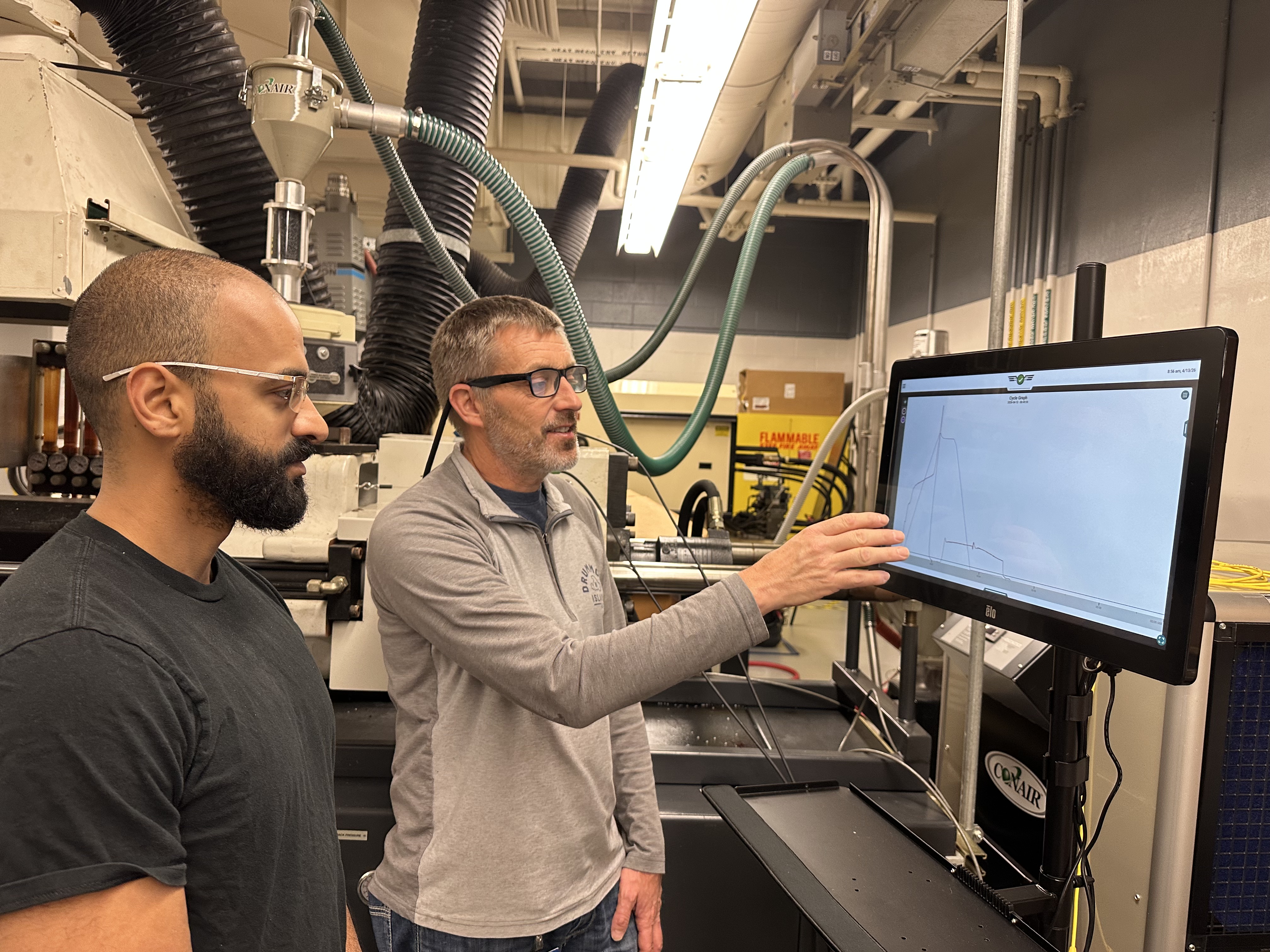
Van Hoven worked in engineering and technical sales at RJG Inc. for 30 years before joining GRCC. He knows from personal experience that RJG’s sensing technology is one of the best in the business. That’s why he was thrilled when RJG offered to place their latest technology on one of the injection molding machines at GRCC.
“RJG is a well-known supplier and their equipment is widely used in West Michigan, “ Van Hoven said. “We had RJG process monitoring technology in our plastics lab, but it was 12 years old. This is an incredibly generous offer from them, and it will make a huge difference to our students.”
Process monitoring technology allows technicians to ‘see’ what is happening inside a mold. Using this tool, a manufacturer can determine if parts are good or bad while they are still in process.
Van Hoven says that training students in this technology has multiple benefits.
“Using RJG’s technology, our students will be able to observe what happens inside a mold as they manipulate different variables,” Van Hoven said. “This gives them a much better understanding of cause and effect, which is an important part of troubleshooting. Knowing how to use this technology is definitely a resume strength for our students.”
The Strength of Industry Partnerships
Jason Robinson, Consulting and Training Manager for RJG, is very excited about helping new people enter the plastics profession.
“Our motto is ‘Mold Smart,’” he said. “In addition to our industry-leading technology, we also provide extensive training and consulting. We see GRCC as a valuable partner. They bring new people into the field and give them broad experience in all types of molding and maintenance work. Then when someone begins working, we can provide complementary training.”
Industry partnerships such as this are one important reason why GRCC graduates are so well prepared to enter the workforce.
"There are a lot of plastics manufacturers in Michigan,” Van Hoven said. “All of them have the same problem, which is the lack of skilled labor. They are crying for it. We meet regularly with our Advisory Board to ensure we are meeting industry standards. In addition, we are not just teaching theory. Our students get plenty of hands-on time in the lab using the equipment and tools they will encounter in the workforce. They can walk into virtually any plastics manufacturer in West Michigan and find RJG technology. That makes them more qualified to step into a meaningful role after completing our program.”
Using Technology to Transform an Industry
One of the reasons there are so many plastics manufactures here is because we are surrounded by industries that make heavy use of plastics in their products. Robinson notes that RJG technology can help the quality of safety-critical parts and reduce waste.
“A molding machine that’s running without our sensing technology can only tell you what the settings are,” Robinson said. “Our sensor sees what is actually happening in the mold. Our software keeps all the data and provides traceability for quality control purposes. That’s important, because manufacturers can’t afford to build thousands of faulty products. And the industries they supply — such as automotive and medical — can’t afford quality lapses that would impact the safety of their products.”
Both Van Hoven and Robinson see technology as an important tool to help “green up” the plastics industry.
“Our software allows manufacturers to deploy their existing molding equipment using less expensive resins that are made with recycled materials,” Robinson said. “That helps reduce use of virgin natural resources, while aligning environmental stewardship with profit objectives.”
“There’s a strong industry push to keep increasing the reusability of plastics,” Van Hoven said. “We touch on this topic in our introductory class. Someday, I hope to offer a plastics sustainability certificate program. Partnerships like the one with RJG are the stepping stones to making that a reality.”
Visit the Plastics-Polymer Engineering Technology Certificate web page or associate degree web page to learn more about the programs.
This story was reported by Julie Hordyk.