Sept. 1, 2026
U.S. Senator Gary Peters visited Grand Rapids Community College on Friday, Aug. 28, to see a nearly $1 million federal investment at work, and watch firsthand as a collaborative robot went from programming to welding.
Peters toured GRCC’s new Automation Lab at the Leslie E. Tassell MTEC, where students learn to program, operate and troubleshoot the same advanced robotics and automation equipment they will encounter in West Michigan manufacturing facilities.
The lab was created with $998,000 in federal funding secured by Peters and will serve students preparing for careers in advanced manufacturing and automation, as well as current workers seeking additional skills and credentials
“We’re gathered here today in a space that represents what community colleges do best: bringing education and industry together to create opportunity and strengthen our regional economy,” said Dr. Sheila Jones, GRCC provost and executive vice president of Academic and Student Affairs.
Jones said rapidly changing automation and robotics technologies are reshaping both manufacturing and the skills employers need. The new lab allows GRCC students to train with workplace technology while giving faculty additional tools for relevant, hands-on instruction and helping employer partners develop the skilled workforce they need to remain competitive.
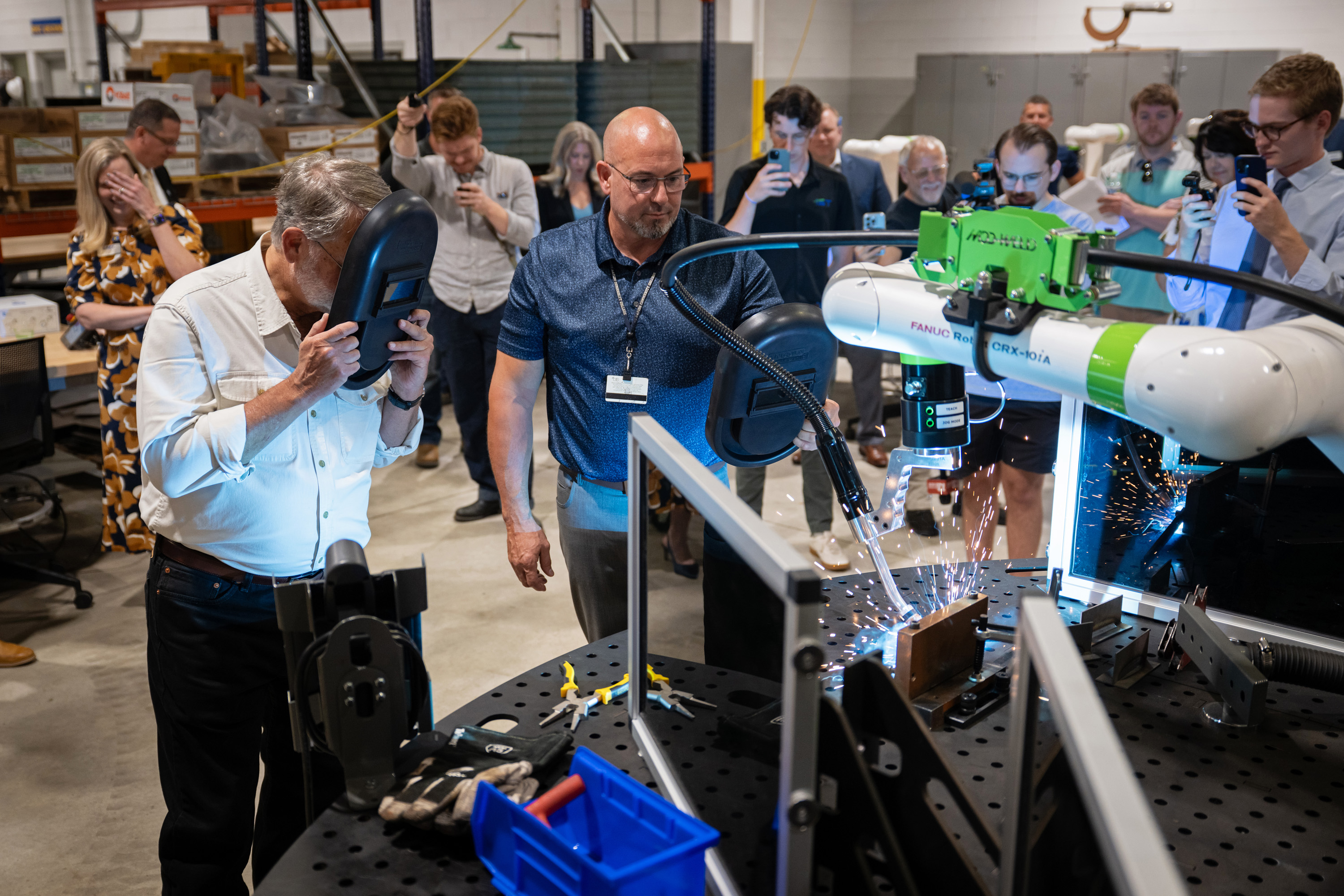
During the tour, Peters watched demonstrations of several of the lab’s robots, including a FANUC collaborative welding robot, or “cobot.”
Unlike a traditional industrial robot that typically operates within a separated work area, the cobot is designed to work alongside people. During the demonstration, GRCC faculty member John Doneth showed how the robot can be positioned by hand, programmed to locate a weld joint and then complete the weld automatically. The same system can be adapted for different tasks, giving students experience with the flexibility they will encounter in modern manufacturing environments.
For Doneth, that hands-on experience is at the heart of the new facility.
He wants the lab to become a “beacon of automation,” where students develop not only technical skills but also the problem-solving, teamwork and troubleshooting abilities employers need.
“The equipment you see here is the same equipment they’re going to use out in the industry,’ Doneth said. “So they’re not going to come out and see something brand new, something different.”
Just as importantly, students will have room to make mistakes, diagnose problems and try again before entering the workforce.
Doneth said that experience can give graduates confidence because they will already have encountered challenges, worked through them and learned how to solve problems as part of a team.
Peters said manufacturing remains essential to Michigan’s economy and future, even as technology changes how work is done. Advanced robotics and artificial intelligence will continue to transform manufacturing, but those technologies still depend on human creativity, ingenuity and technical expertise.
“GRCC excels at preparing students to get good-paying, in-demand jobs right out of school,” Peters said. “This state-of-the-art and fully automated training facility will not only strengthen those courses, but also GRCC’s efforts to connect students with local employers ahead of graduation to help keep that talent in Michigan.”
The impact of that training was represented by GRCC alumnus Cody Langlois who studied industrial maintenance at GRCC before earning a bachelor’s degree in welding engineering technology from Ferris State University and building a career in automation.
Langlois credited the GRCC faculty and the hands-on education he received with helping prepare him for his career. He said the new lab will give future students an even stronger opportunity to work with cutting-edge equipment before entering the industry.
“GRCC gave me the foundation to succeed in my professional career, and this new investment is going to give future students an even greater foundation to succeed,” Langlois said.
“That preparation is increasingly important to manufacturers,” said Ingrid Tighe, president of the Michigan Manufacturing Technology Center.
Tighe said workforce development is the top issue reported by manufacturers her organization works with across Michigan. Employers are looking both for people to fill open positions and for workers who already understand how to implement and work with automation technology. GRCC provides an important link between those employers and workers who need the skills in increasingly automated workplaces.
For Provost Jones, the investment is also about making sure GRCC continues creating pathways for people at every stage of their careers.
“Whether someone is coming to us directly from high school, looking to change careers or returning to build new skills, we want them to leave GRCC prepared for what comes next in the workforce,” she said.
Peters’ stop at GRCC was part of his 10th and final annual motorcycle tour across Michigan. The “Thank You, Michigan” tour includes stops across the state as Peters completes his final year representing Michigan in the U.S. Senate.