March 19, 2026
Grand Rapids Community College (GRCC) connects with the community by addressing issues that matter locally — a connection that often shapes what happens in its classrooms. These close community ties helped inspire a semester-long focus on activist Pauli Murray in assistant professor of Sociology, and Gender Studies coordinator, Dr. Emily Pain’s Gender Studies course.
The idea began when Leanne Challa, program manager for Transfer Bridges to the Humanities U-M, approached Dr. Pain about collaborating with the Grand Rapids Women’s Chorus. The chorus sent GRCC an invitation to participate in a monthlong community celebration honoring Murray’s activism and legacy.
To promote equity and deepen community engagement, GRCC partnered with the Grand Rapids Women’s Chorus and several local organizations — including Diatribe, Grandville Ave for Arts and Humanities and Grand Valley State University — to present a series of events highlighting Murray’s life and impact.
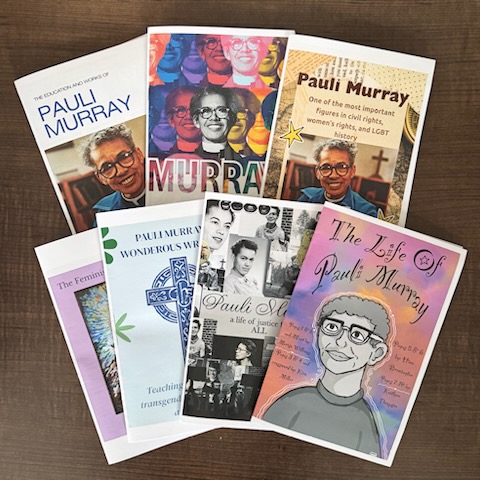
Learning Through Zines
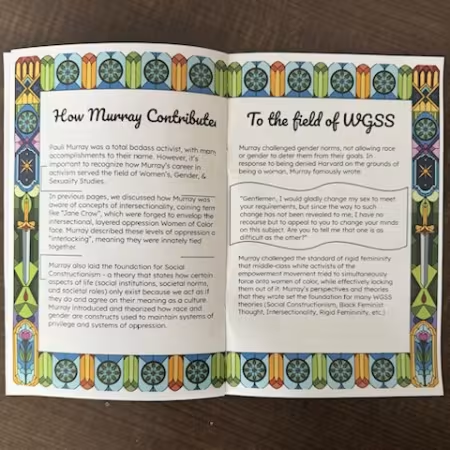
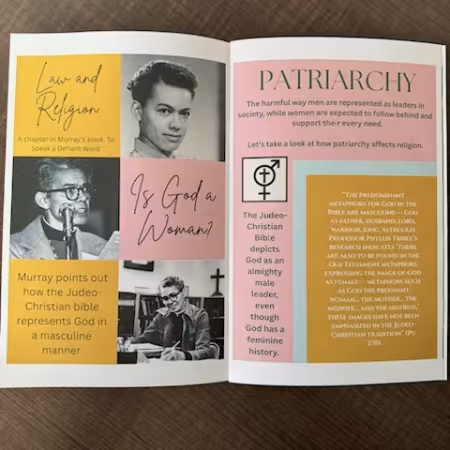
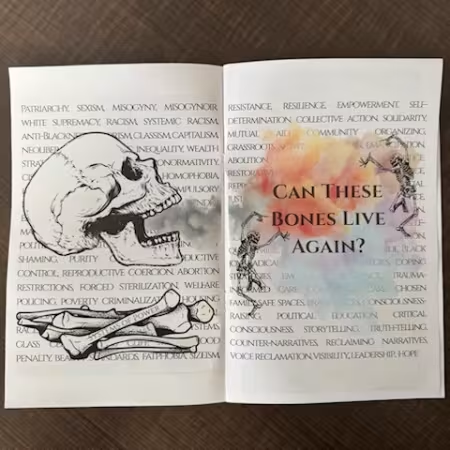
Dr. Pain’s Gender Studies classes have previously explored social justice and activism through projects such as zines — small self-published booklets that combine text and visuals. The format encourages students to translate complex ideas into accessible and creative forms. Dr. Pain adjusted this semester’s course to center on Murray’s life and influence, giving students the opportunity to study the activist’s work while contributing to the broader community programming.
For this project, students will be creating zines focused on Murray’s life, activism and lasting influence.
“Our hope in the class is that the zines are educational in two ways,” Dr. Pain said. “Students are learning about Murray’s life, but they’re also approaching it through a Gender Studies perspective.”
Grant Funding Supports Student Work
A grant from the Mellon Foundation and Transfer Bridges–UM provided funds for the production of the zines and supported two student-centered events, hosted by the Gender Studies program, designed to share the students’ research with the community.
“GRCC Transfer Bridges recognizes the importance of providing humanistic experiences for our students that can help shape their academic journeys,” Challa said. “Acknowledging the impact of historical figures like Pauli Murray — and understanding how our lives today are shaped by their work — helps broaden our understanding of ourselves and the world around us.”
The two student-centered events serve as bookends to the larger community programming. On March 12, the Gender Studies program hosted a coffee hour introducing Murray’s life and the advocacy that defined decades of work. On March 26, the program will host a cookie hour in hopes to reflect on the month’s events and the ways in which Murray has inspired the community as a whole.
“With these events, students can take the reins by teaching other students, faculty, staff and community members about Pauli Murray’s life,” Dr. Pain said. “We want to provide an overview of Murray’s advocacy and social justice work, including the many career paths and approaches reflected in Murray’s work over a 40- to 50-year period.”
Learning Through Murray’s Story
Even for an experienced educator, studying Murray’s life brought new insights.
“It was a learning experience for me going through Murray’s life,” Dr. Pain said. “I’m excited for the students to take what we’ve learned in the classroom into the broader community. It’s about turning students into educators and helping them see themselves not just as consumers of knowledge, but as people who can teach others.”
Dr. Pain hopes the experience helps students see themselves as agents of change. By examining Murray’s advocacy and social justice work, students can recognize their own ability to raise awareness and contribute to conversations within their own communities.
“Murray focused on racism and sexism, as well as other issues related to civil rights and sexuality,” Dr. Pain said. “Students can take this knowledge into the community and share it through a Gender Studies lens. They begin to see that advocacy can take many different forms, and that they can participate in ways that fit their strengths. It doesn’t look like just one thing — Murray’s life makes that clear.”
Community Events Honoring Murray
Community programming throughout March offers several opportunities to explore Murray’s life and legacy.
The GRCC Woodrick Center will host Calvetta Watlington from the Pauli Murray Center as part of its Diversity Lecture Series on March 19.
GRCC will also screen the documentary “My Name Is Pauli Murray,” followed by a panel discussion featuring representatives from the ACLU, the Pauli Murray Center, the Episcopal Church, GRCC and Grand Valley State University.
On March 21, the Grand Rapids Women’s Chorus will present “Sincerely Yours, Pauli Murray,” a performance tracing the story of Murray’s life and work.
The series will conclude on March 26 with a cookie hour hosted by Dr. Pain and the Gender Studies program at 4 p.m. in the Reading Room in White Hall on GRCC’s campus.
“My hope is that students learn there’s no single way to engage in advocacy,” Dr. Pain said. “It’s not only the forms of activism people may first think of, like protests or social movements. There is also important work happening behind the scenes, and every part of that work matters.”
Continuing The Legacy
Throughout the semester, students explored Murray’s lasting impact by reading To Speak a Defiant Word: Sermons and Speeches on Justice and Transformation. They also examined Murray’s life through biographical poetry in Pauli Murray: The Life of a Pioneering Feminist and Civil Rights Activist and incorporated excerpts into their “Pauli Murray Storybook,” which will be displayed during their community events.
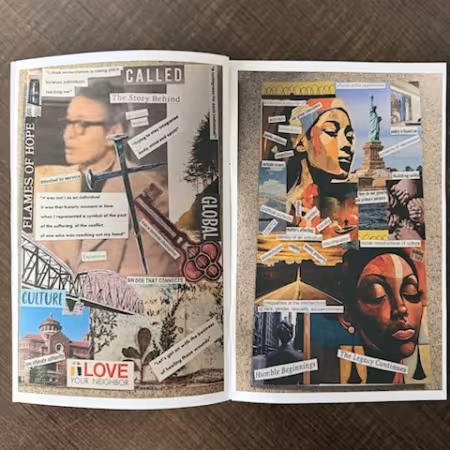
Much of Murray’s life is documented through extensive personal records and writings.
“There’s a lesson in that, too,” Dr. Pain said. “Even if you don’t see yourself as a major figure in the world, your voice matters. Murray’s writings revealed the depth of the work they did. The zines are the students’ way of contributing something meaningful.”
As Murray once wrote, “True community is based upon equality, mutuality and reciprocity. It affirms the richness of individual diversity as well as the common human ties that bind us together.”
Dr. Pain’s classroom reflects Murray’s notion by encouraging students to learn together, create meaningful work and share their knowledge beyond campus.
Visit the Gender Studies program web page to learn more about the pre-major and areas of study.
This story was reported by Anjula Caldwell.