April 16, 2026
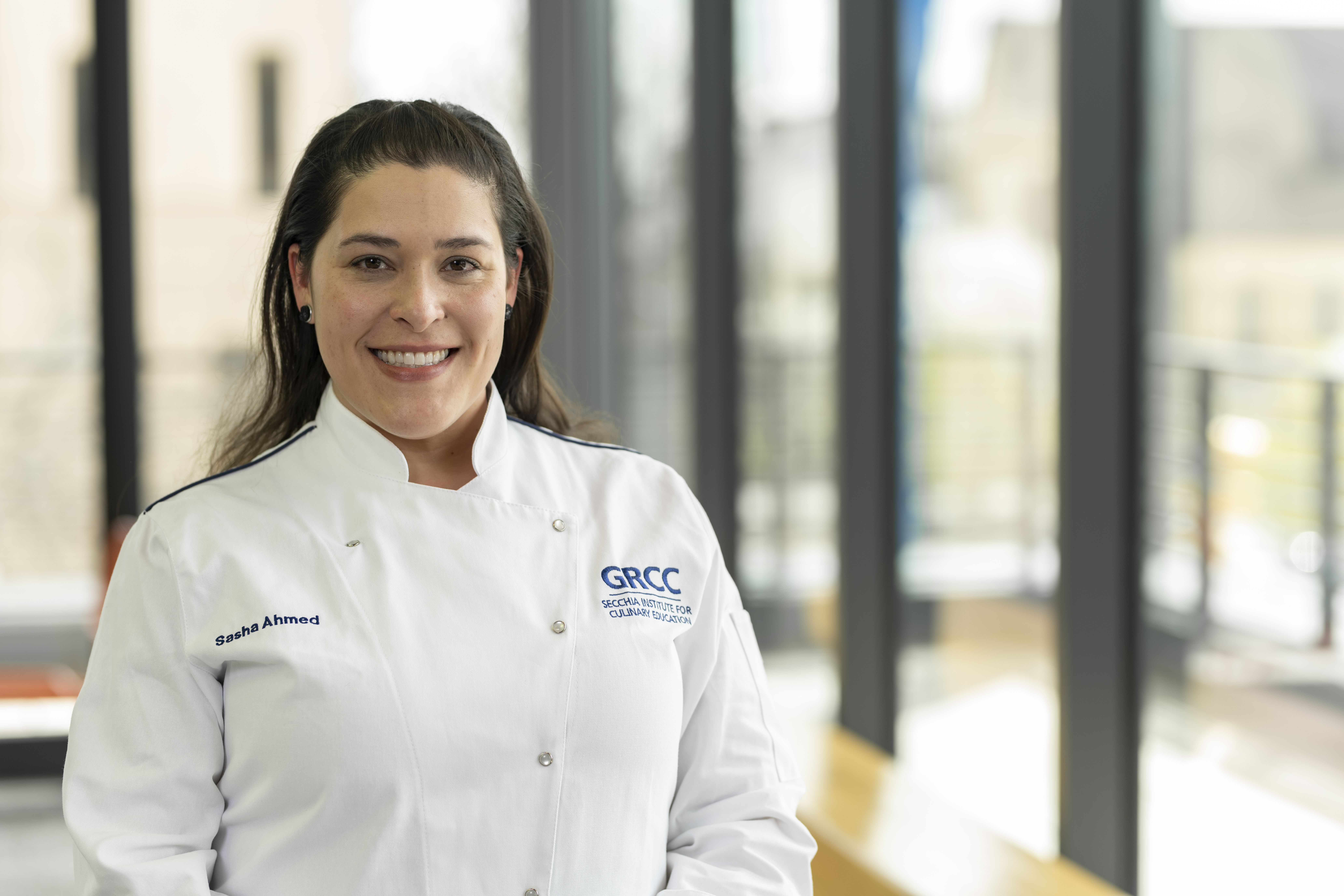
Food has brought people together for centuries. Whether during holidays, special occasions or a night out, gathering around the table fosters connection. Sasha Ahmed, an associate professor at the Secchia Institute for Culinary Education at Grand Rapids Community College, incorporates that sense of community into her teaching.
Ahmed began as a student before returning to GRCC as an educator.
“I feel very lucky to have the opportunity to come back and teach,” she said. “I’m in a department that works so well together. I also have a great program director, Dr. Werner Absenger. He encourages me to explore new ways to enhance our program. Even if something isn’t strictly culinary-focused, I have support. As a department, we understand how important it is to be part of the community. We take our role as the community’s college very seriously.”
Sharing Resources With the Community
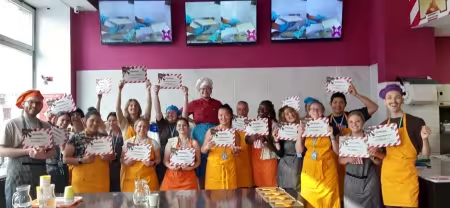
The culinary program maintains strong ties to the community through partnerships with local organizations. Ahmed has worked with Spring GR, an organization that provides business education to underserved communities.
Recognizing the talent of culinary students seeking to grow their businesses, Ahmed partnered with Spring GR’s Kitchen Accelerator Program to support aspiring food entrepreneurs.
“I’ve had the privilege of teaching workshops for each cohort, as well as additional classes for alumni,” Ahmed said. “Topics range from basic kitchen skills and culinary math to platter design and event planning. I enjoy sharing knowledge, brainstorming and getting to know participants. It’s rewarding to help people gain skills that can contribute to their success.”
Ahmed also partners with West Michigan Welcome Plan Collaborative and A Glimpse of Africa, organizations advocating for immigrants and refugees.
“I believe access should be equal for everyone,” she said. “Being involved is a way to use what I have to help open doors or provide support to those entering the culinary world. The work can feel small, but it matters to the people you’re helping.”
Focusing on Experience
Ahmed’s commitment to sharing knowledge is central to her teaching. She works with both students and community members, emphasizing practical skills and professional growth.
“Our culinary program is dedicated to education and excellence,” she said. “We want to share what we know to help people succeed in an industry we love. If we want our students to be employable, sharing knowledge is essential. We aim to help them grow.”
Ahmed noted the program’s strong alumni network. Graduates stay connected for job references and updates, reflecting the program’s ongoing support.
“We exist for the community, and that shows in many ways,” she said.
Expanding Learning Beyond the Classroom
Ahmed also helps lead study abroad experiences, giving students opportunities to engage with different cultures and cuisines.
“We think it’s important for students to become better global citizens, and travel plays a role in that,” she said. “Experiencing food where it’s made — like tasting balsamic vinegar in Italy — is very different from trying it at home. These experiences help students grow in both passion and understanding.”
She has seen significant personal growth in students during these trips.
“Some students had never been outside Michigan,” Ahmed said. “Watching their transformation from the beginning to the end of the trip is remarkable. They gain a deeper appreciation for different cultures and develop stronger social skills with their peers as they spend extended time together. It’s incredible to watch them build relationships and a stronger sense of community. It’s a meaningful experience for all of us.”
Bringing It All Together
For Ahmed, teaching at GRCC provides a foundation for community engagement and service. She continues to explore new ways to connect with others and support students.
“I feel supported in finding ways to connect with the greater community,” she said. “This industry can be stressful, and we need each other.”
With that support, Ahmed began teaching a stress management course focused on responding to the hospitality industry.
“We wanted to focus on stress management as a department. I was especially interested in teaching this topic and helping others recognize how valuable it is to know how to decompress,” she said. “With encouragement from Dr. Absenger, I pursued training in this area. We secured funding, and now I teach techniques like meditation and breathing. We love what we do and want to be able to teach others how to stay sustainable in their passions.”
Ahmed said the program reflects a broader commitment to community.
“It’s meaningful to be part of a department that keeps food — and everything connected to it — at the center of community,” she said.
Visit the Secchia Institute for Culinary Education web page to learn more about their areas of study.
This story was reported by Anjula Caldwell.