May RJF Swing Chiller Update
The swing chiller project is nearing completion and should wrap up by the end of June.
ATC Swing Chiller
In mid-March a new actuator was installed on the drain tower. A new one was needed due to corrosion of the old one. An actuator is important as it helps to control proper water flow during drain down.
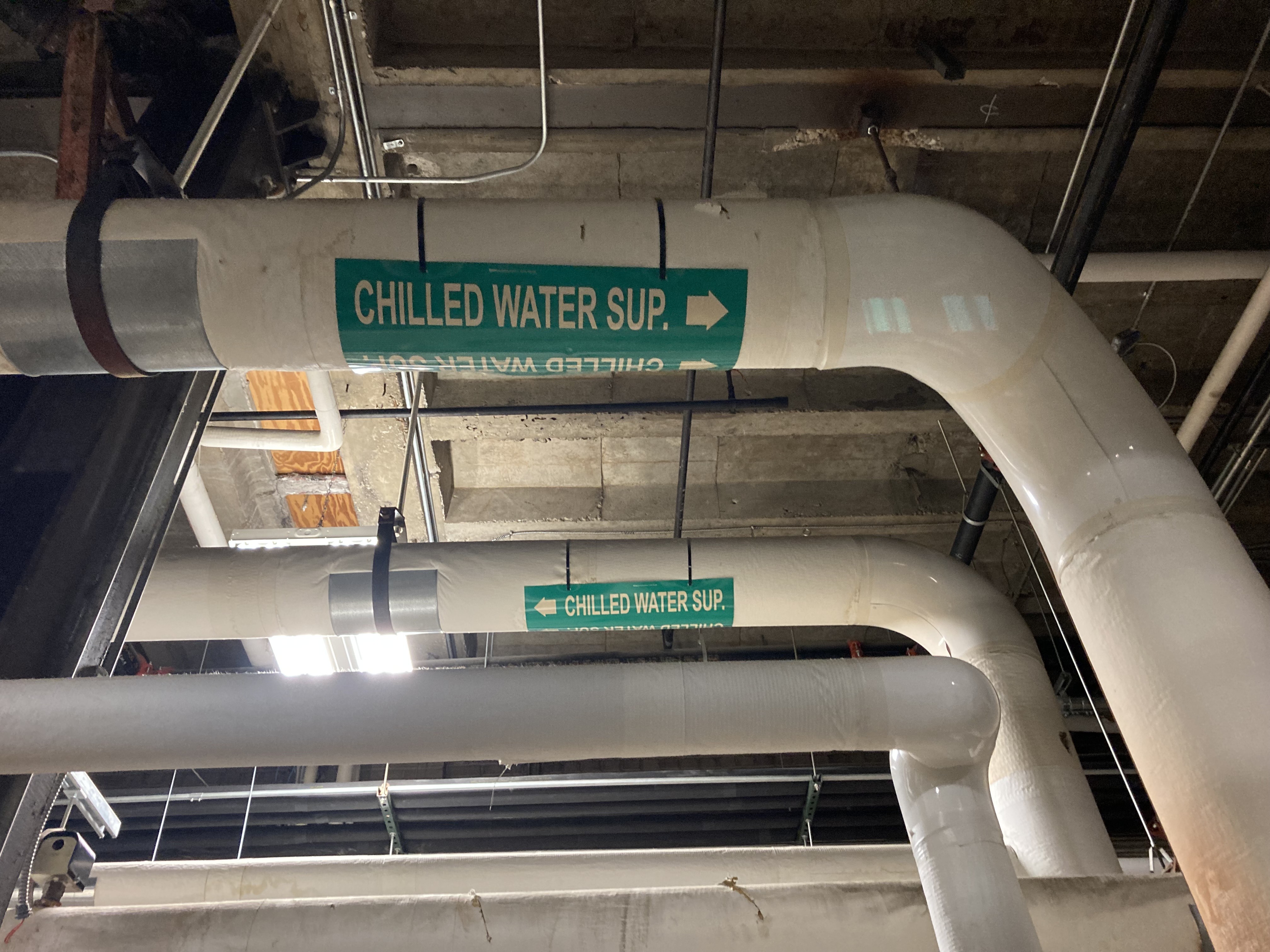
The insulation of pipes and equipment was completed. This is important for energy efficiency, resource conservation, emissions reduction and system longevity.
Pumps were started and then shut down until better weather arrived. They were then aligned to the cooling towers. March was a pretty cold month and temperatures in the mid-60’s or preferably 70’s are best for starting up pumps and chillers and letting them run. This was completed in late April and the ATC swing chillers are up and running.
A sound enclosure was ordered for the roof top unit and arrived in late May. The construction manager scheduled a crane lift on Saturday, May 30th to get the steel and panels on the roof. This shouldn’t take longer than two weeks to install. Why a sound enclosure on the ATC unit? For one, to make sure GRCC complies with the City of Grand Rapids noise ordinance, the ATC is closer to residential areas than some other buildings on campus. The acoustics in an enclosure keep the unit noise from echoing off concrete walls. It also shields the chiller from weather, dirt and vandalism, plus helps keep air flow steady.
All of this is important, but most important of all, the ATC swing chiller passed inspection!
RJF Swing Chiller
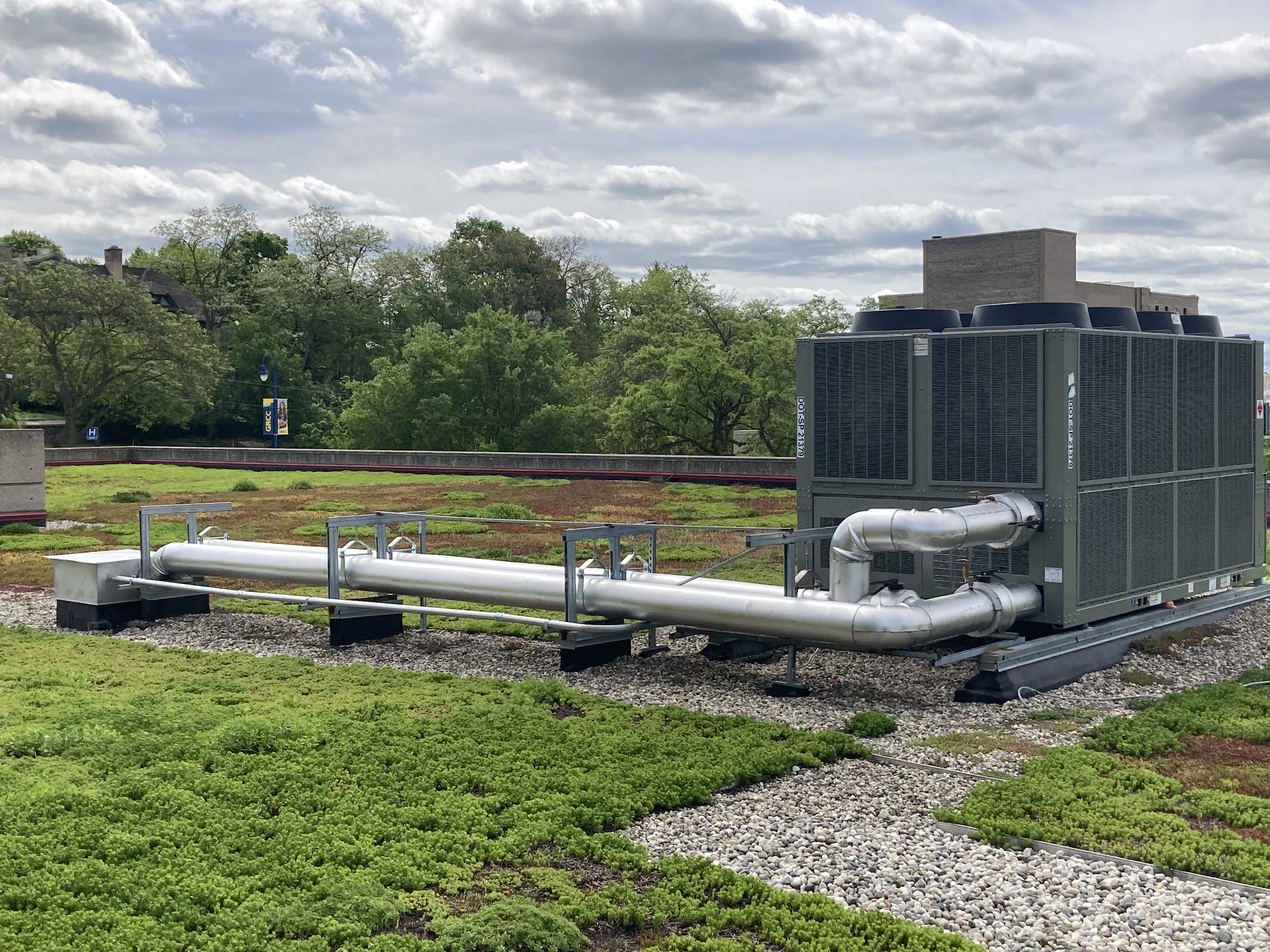
The insulation of pipes and equipment was completed in March.
In April the swing chiller was turned on for testing and the start up went well.
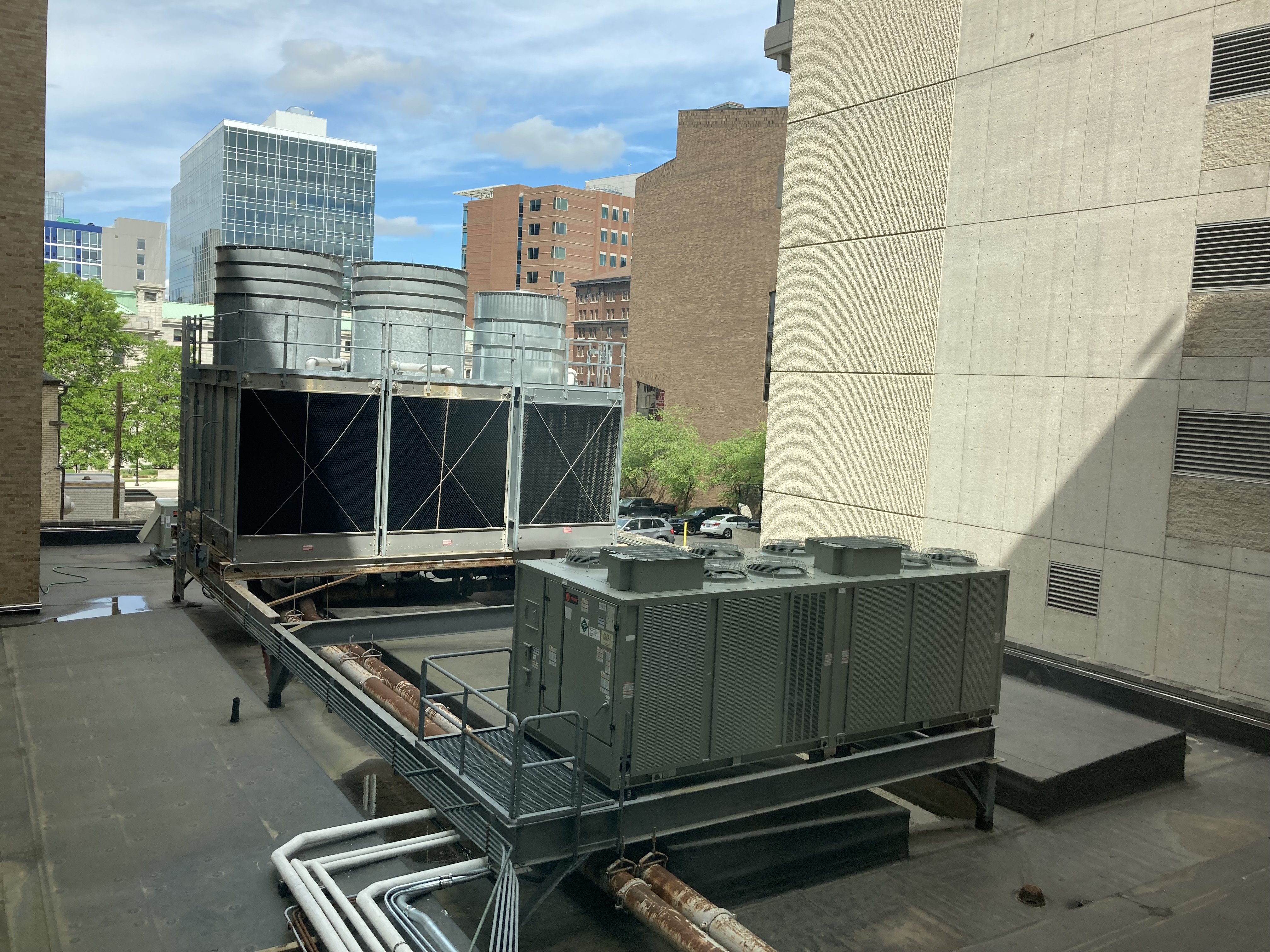
While the chillers themselves passed inspection, the inspector said there needed to be a rooftop platform around the equipment. The platform makes getting to the equipment easier and the inspector feels it will be safer for HVAC technicians to have this structure when doing maintenance and repairs.
The platform wasn’t part of the original plan, so the architects have drawn up plans and will get design approval from the inspector and order the platform. Installation is expected to take two to three weeks.
Other Project Details
In April Trane started programming the new swing chillers, making sure all the systems “talk” to each other. The contractor, architect, GRCC’s Director of Facilities, Energy Manager and HVAC Technicians did a project “walkthrough" and created a pre-punch list. The contractor has been resolving that list and a few weeks later another walkthrough was performed and the punch list was updated.
Nearing the End
Installation of a sound enclosure and a platform are the last two things needed for this project!
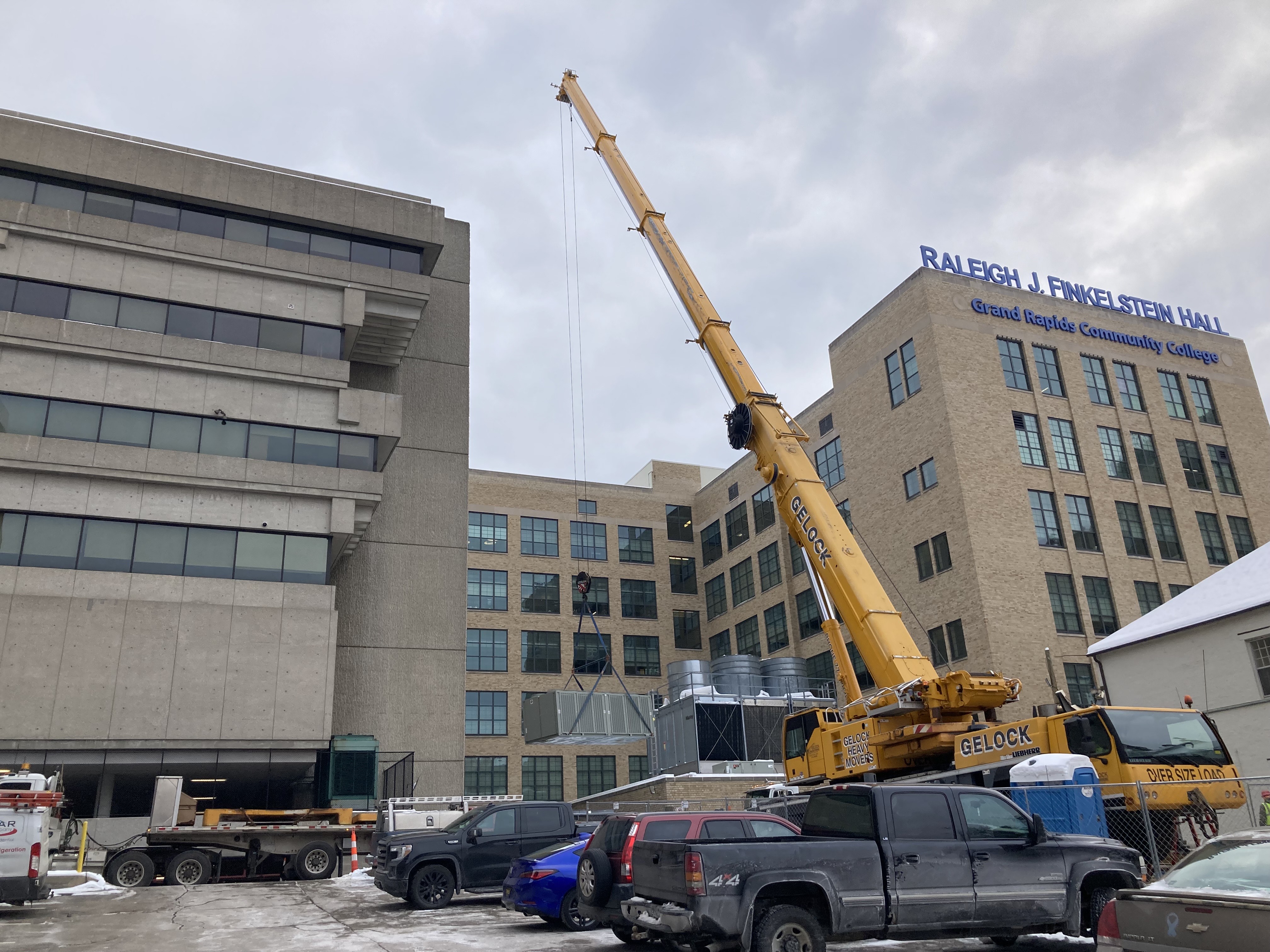
The project started with crane lifts and will end with crane lifts. Then, after the last inspection, the swing chillers will be ready to do the work we need them to do. They will help the main chillers keep the buildings comfortable in the summer, take over in the fall so the main chillers aren’t cycling on and off, keep IT rooms and labs cool in the winter and do what is needed in the spring for whatever weather Michigan brings.
This project will continue for another month or so with the structural additions of the sound enclosure and platform and that should wrap up by the end of June.
Related content
February RJF Swing Chiller Update
Grand Rapids Community College is replacing the swing chillers in Raleigh J. Finkelstein Hall (RJF) and the Wisner-Bottrall Applied Technology Center (ATC). These aging swing chillers use a refrigerant that is no longer in production. Because these units provide backup, replacing them ensures the cooling system keeps running if the main chiller fails or needs repairs. This upgrade supports a continuous high-quality learning environment for students by maintaining a comfortable environment.
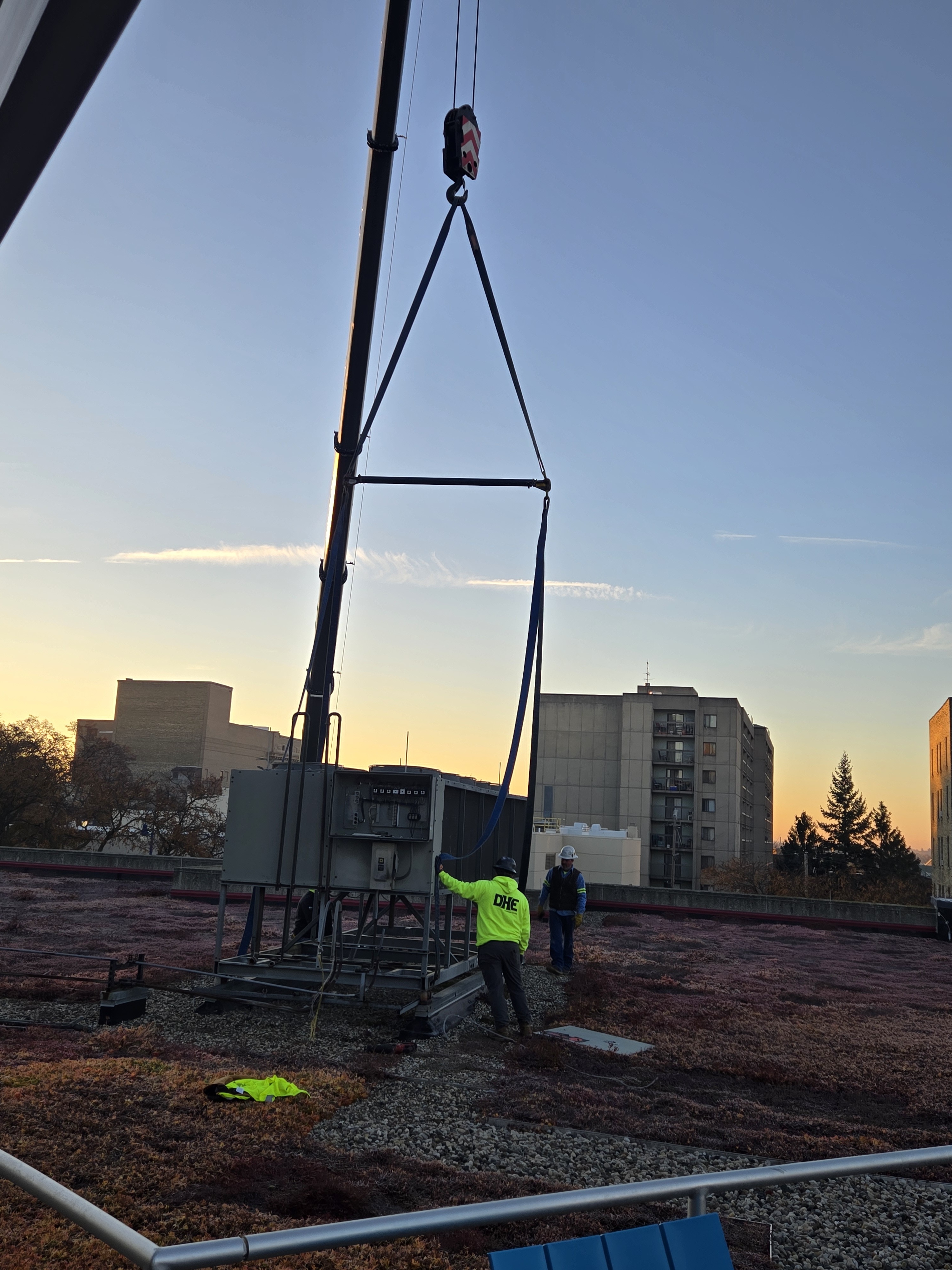
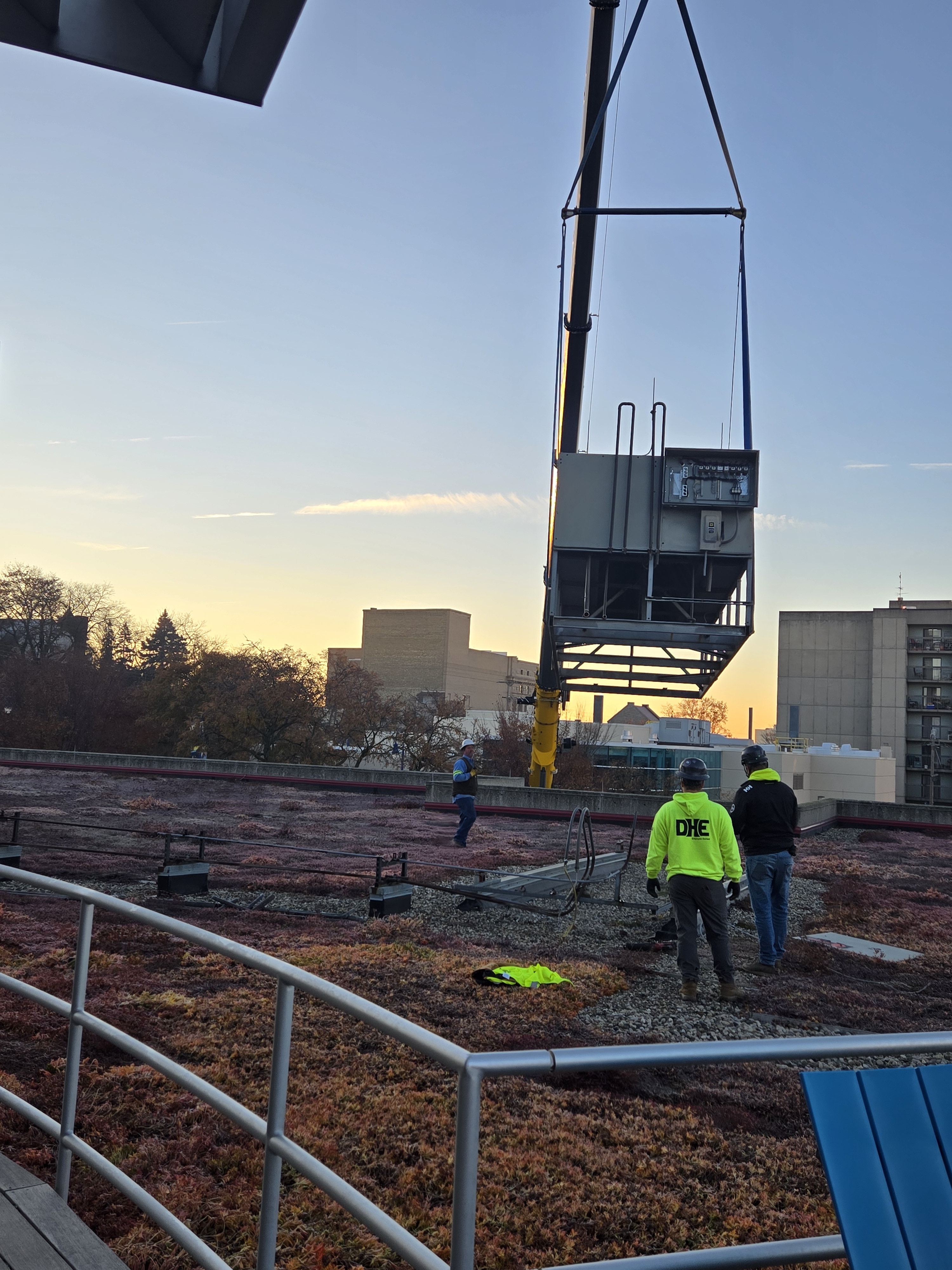
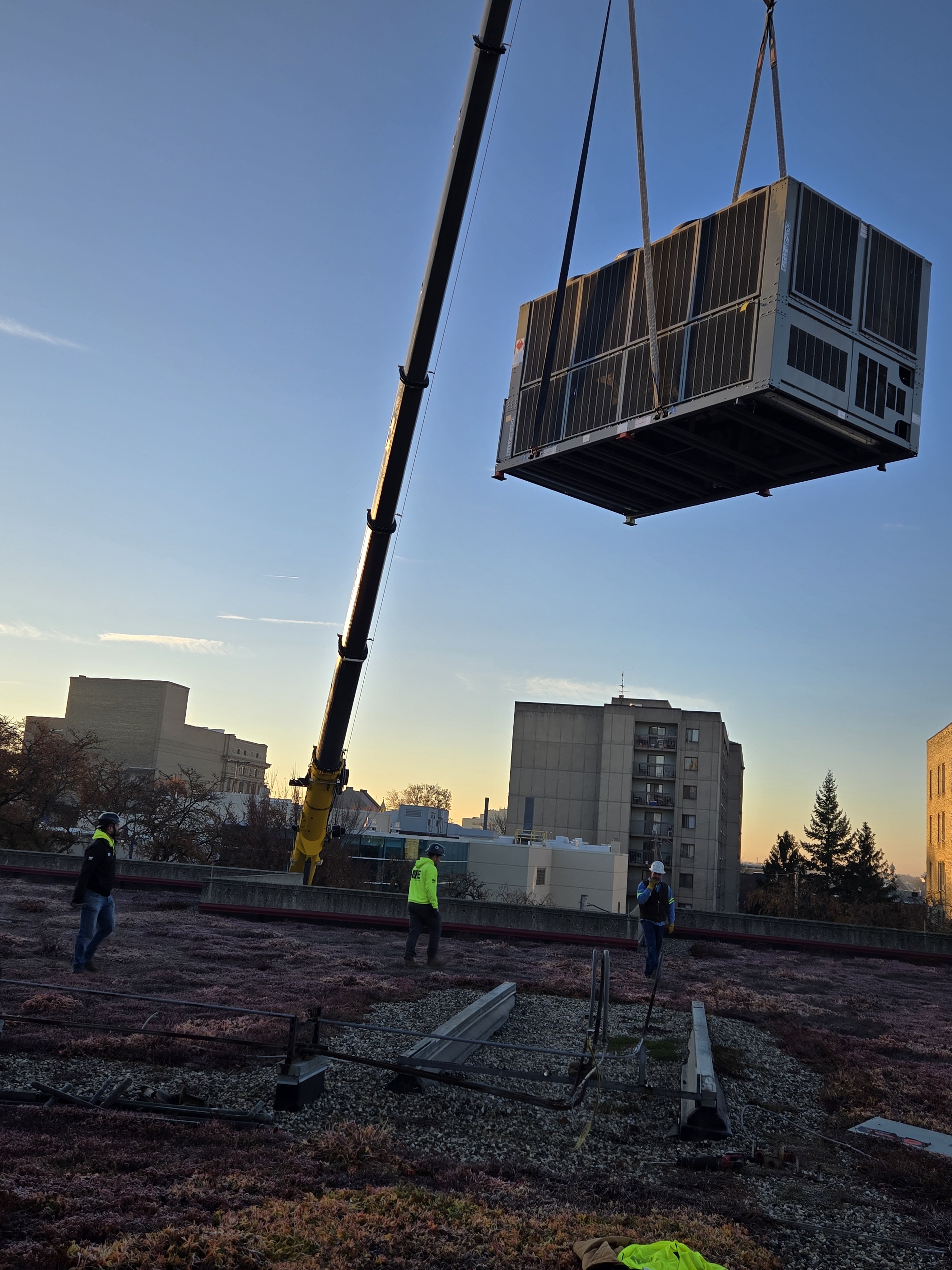
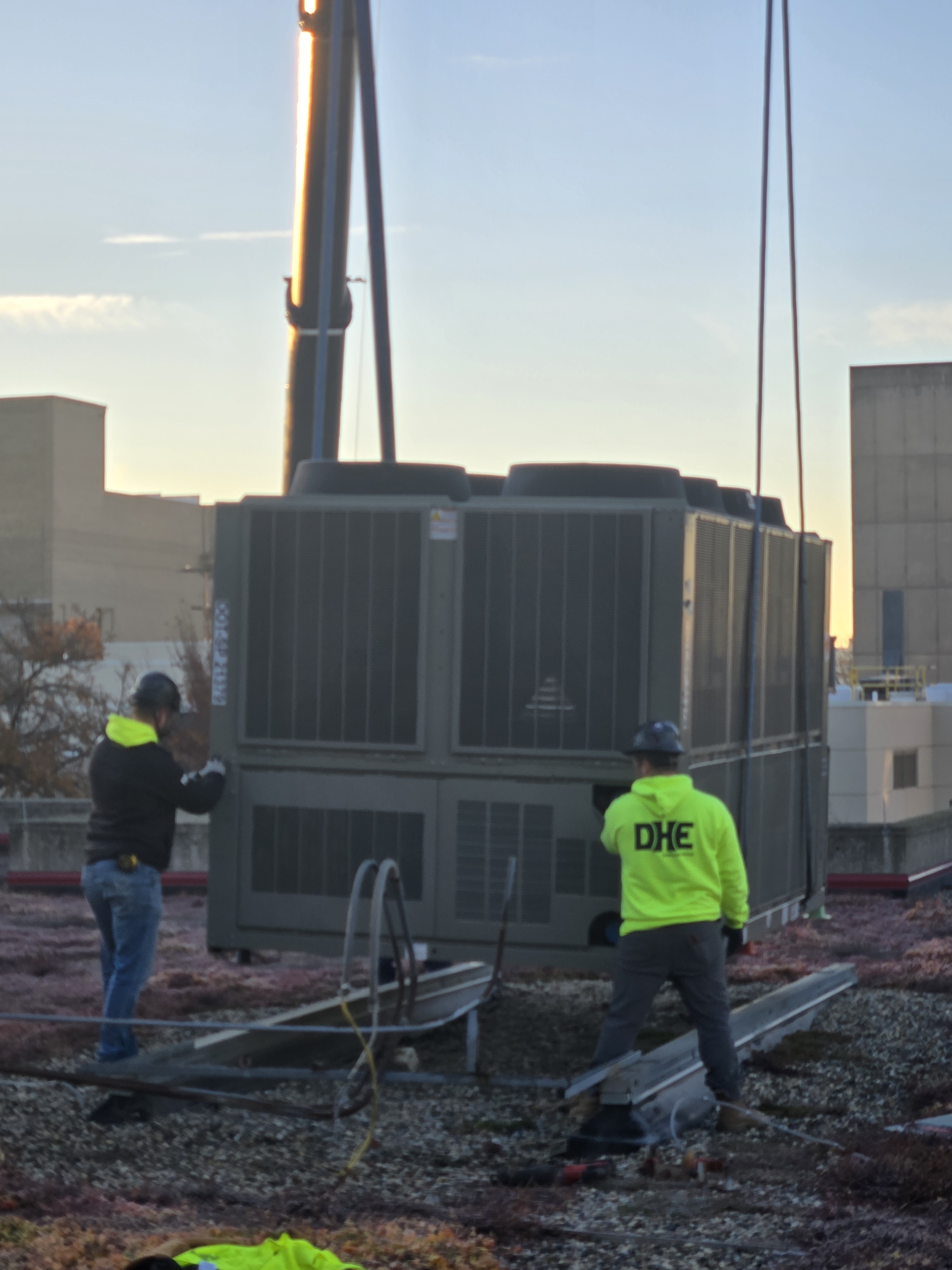
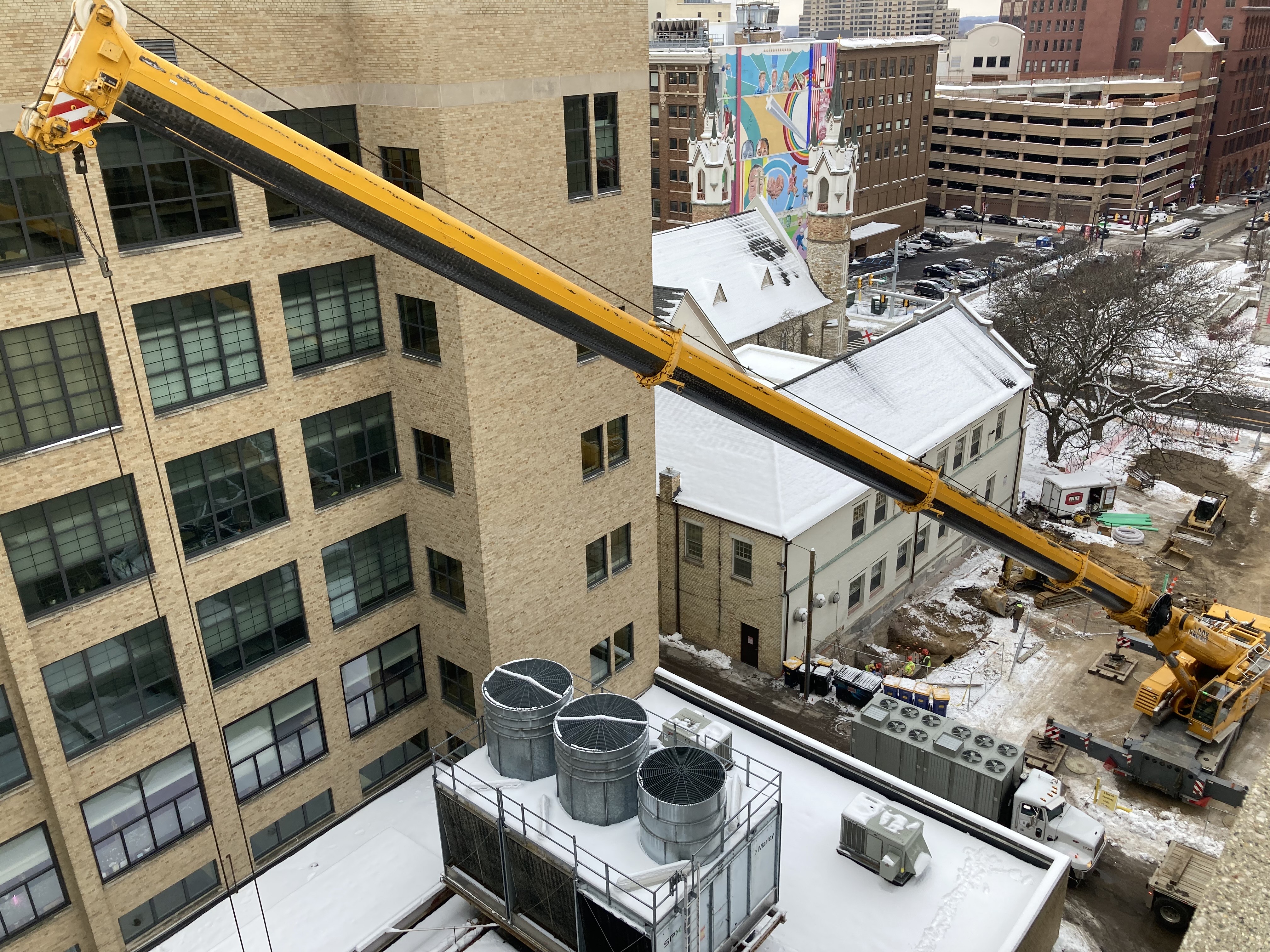
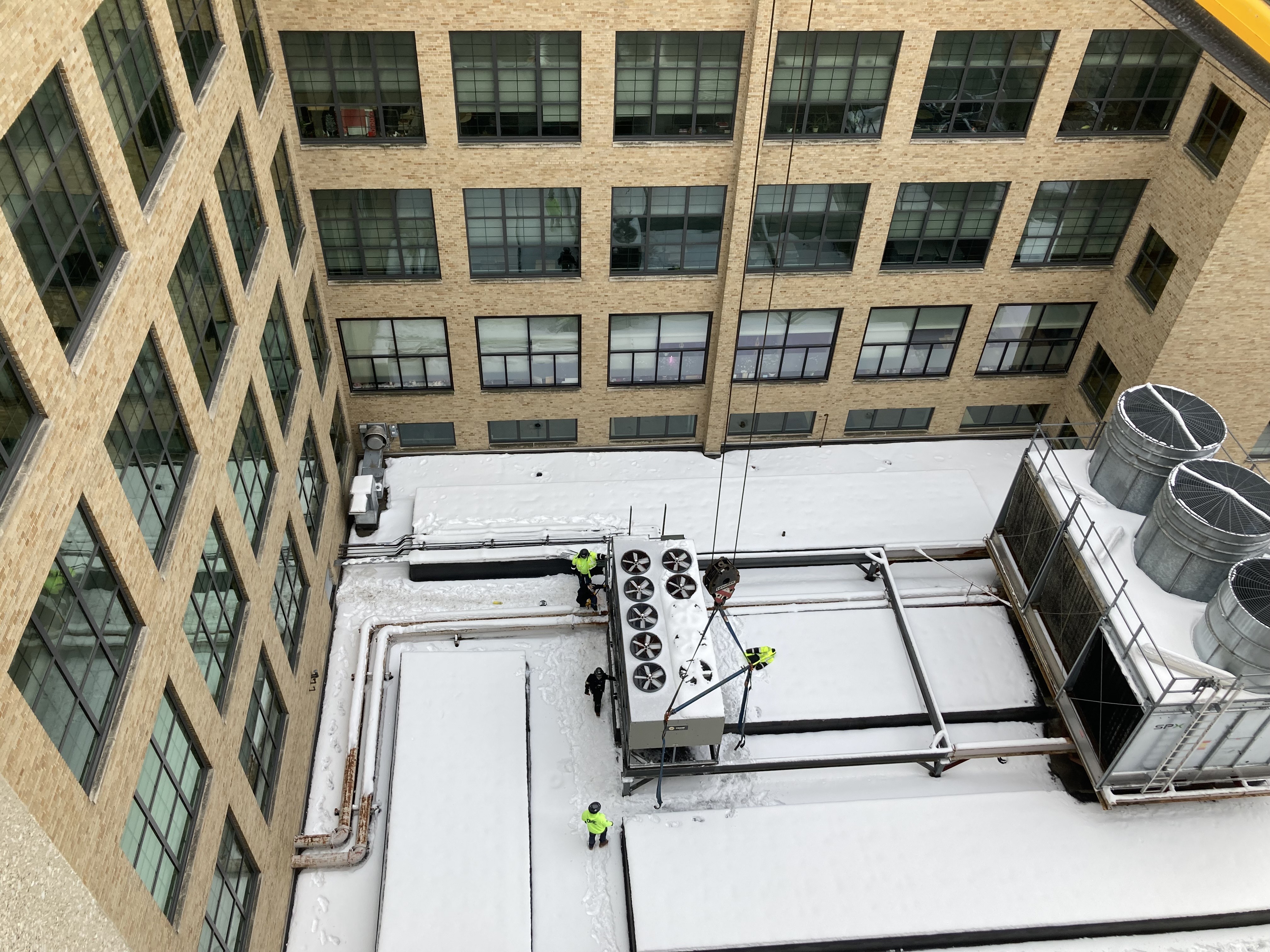
The RJF swing chiller replacement began on Dec. 5with the crew and a crane removing the old swing chiller and installing the new. They used a combination of rigging tools (slings, hooks and various types of hardware) and attached them to the old chiller. Once the team made sure the load was stable, balanced and secured, they lifted it off the roof and onto the ground. They used the same process to lift the new chiller to the roof and attach it to the steel support beams.
The new swing chiller is in place on the roof. What next?
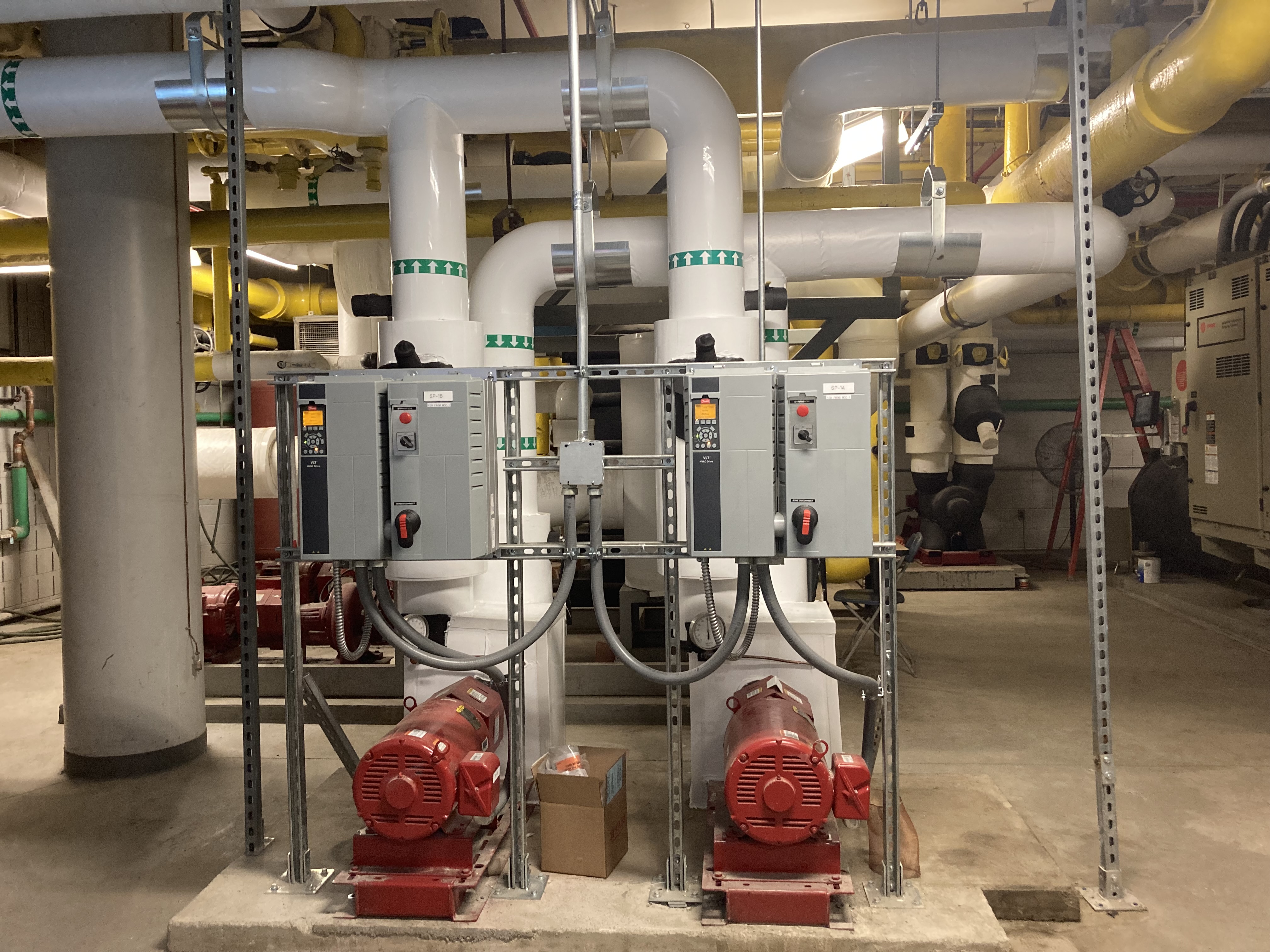
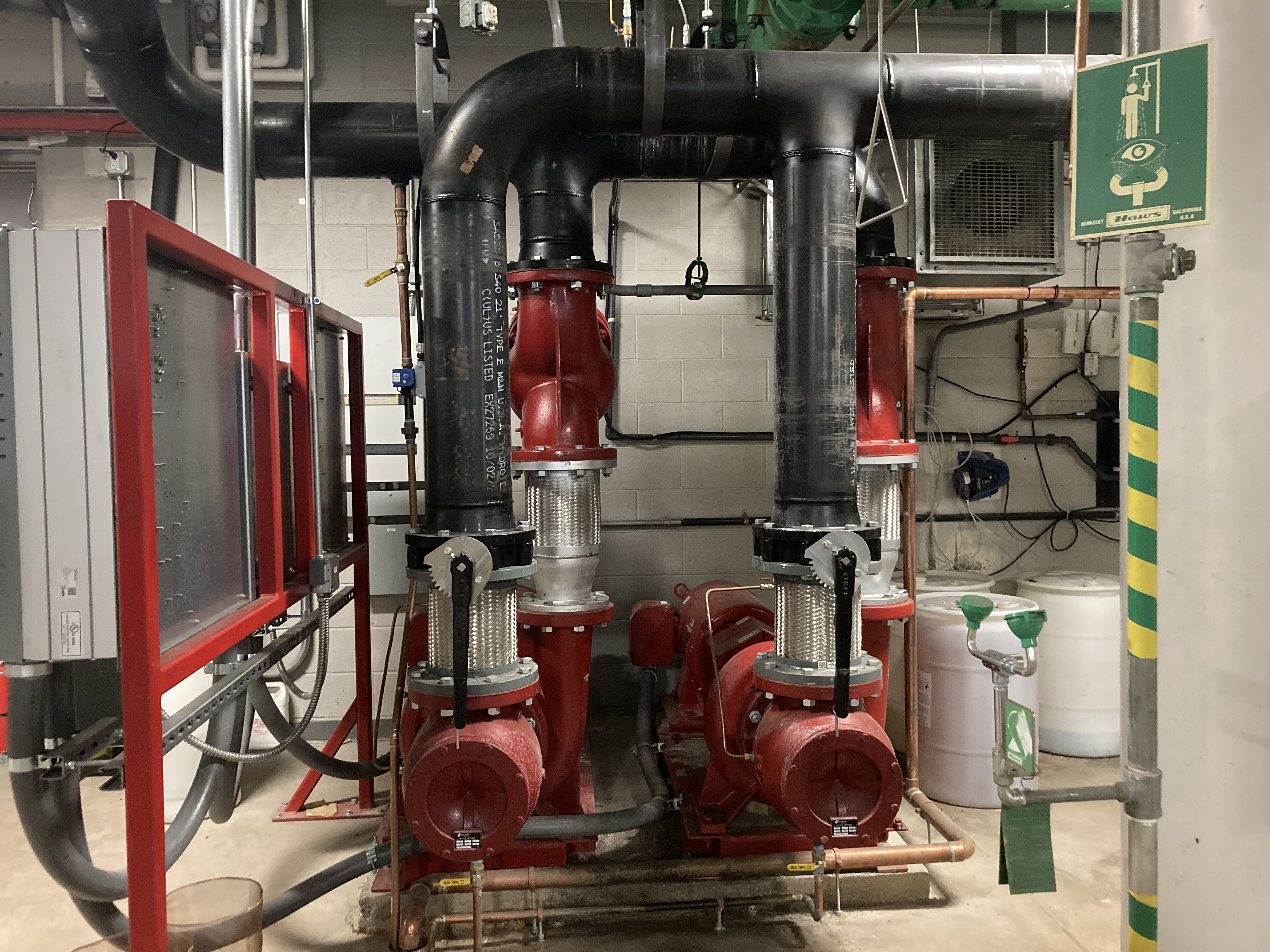
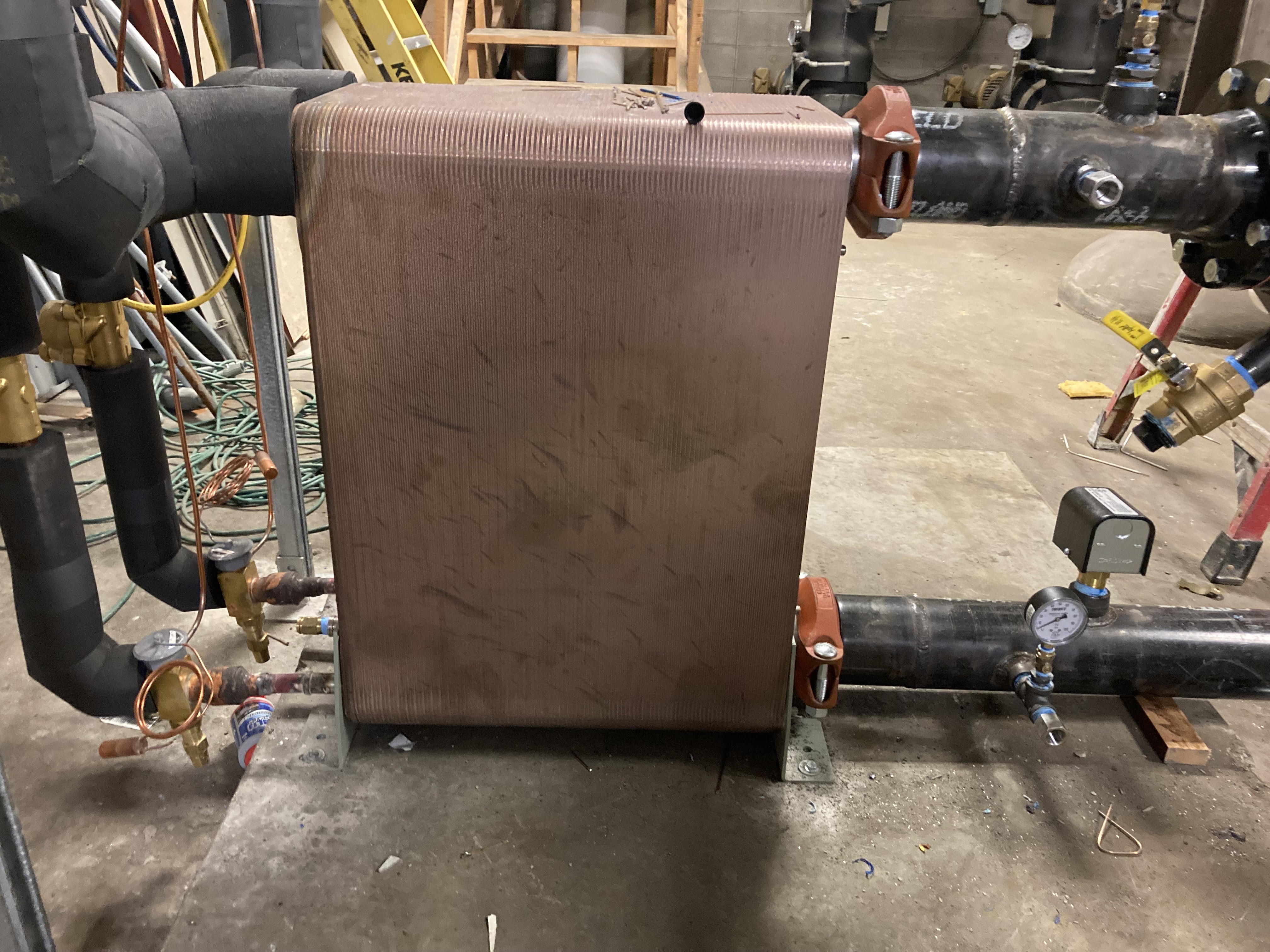
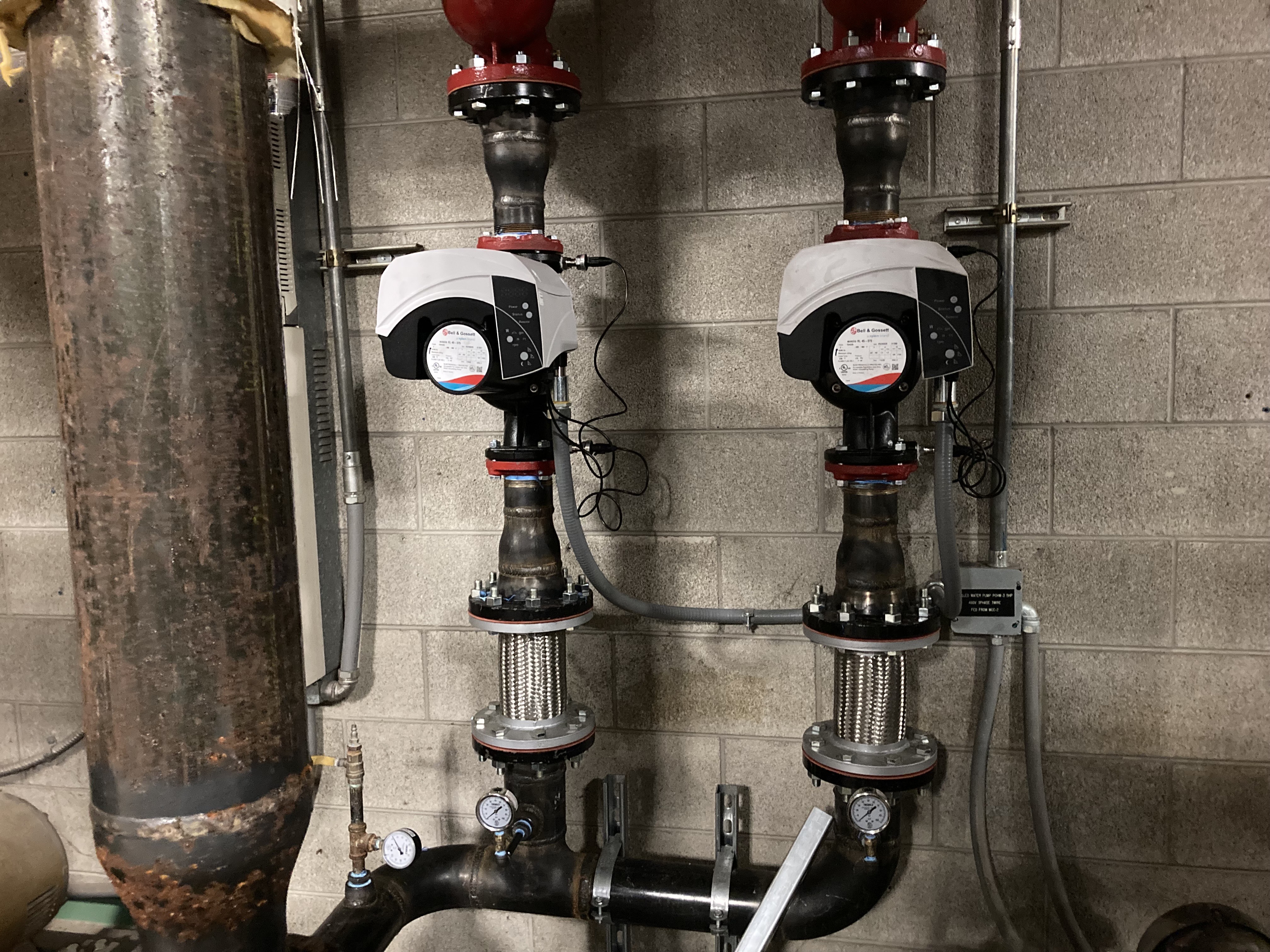
Contractor DHE hooked the new outdoor swing chiller up to the primary loop and secondary loop that pumps the cold water throughout the building. The building utilizes outside air when the chillers are not in operation for cooling. The crew installed a new indoor section of the swing chiller that consists of the evaporator and pumps. Each swing chiller has its own dedicated pump. The crew installed new pumps that pump water through the heat exchanger. These pumps take the fluids and transfer them from one place to another.
A Trane electrician will wire the system and connect all components to the main panel. This connection enables the equipment to 'talk' and share data. Once the units communicate, the technician programs them directly into the main control system.
In the meantime, DHE will continue to insulate the pipes and demobilize.
When the weather is warmer, full start up and testing will take place. The new chiller runs primarily in the early spring, early fall and winter and will be ready to go right on time for spring! Thanks to Wes Casarez, one of GRCC’s HVAC technicians for helping gather and explain this information!
December ATC Swing Chiller Update
Major projects require team work and collaboration, not only from the Facilities and construction management end, but also sometimes from GRCC departments.
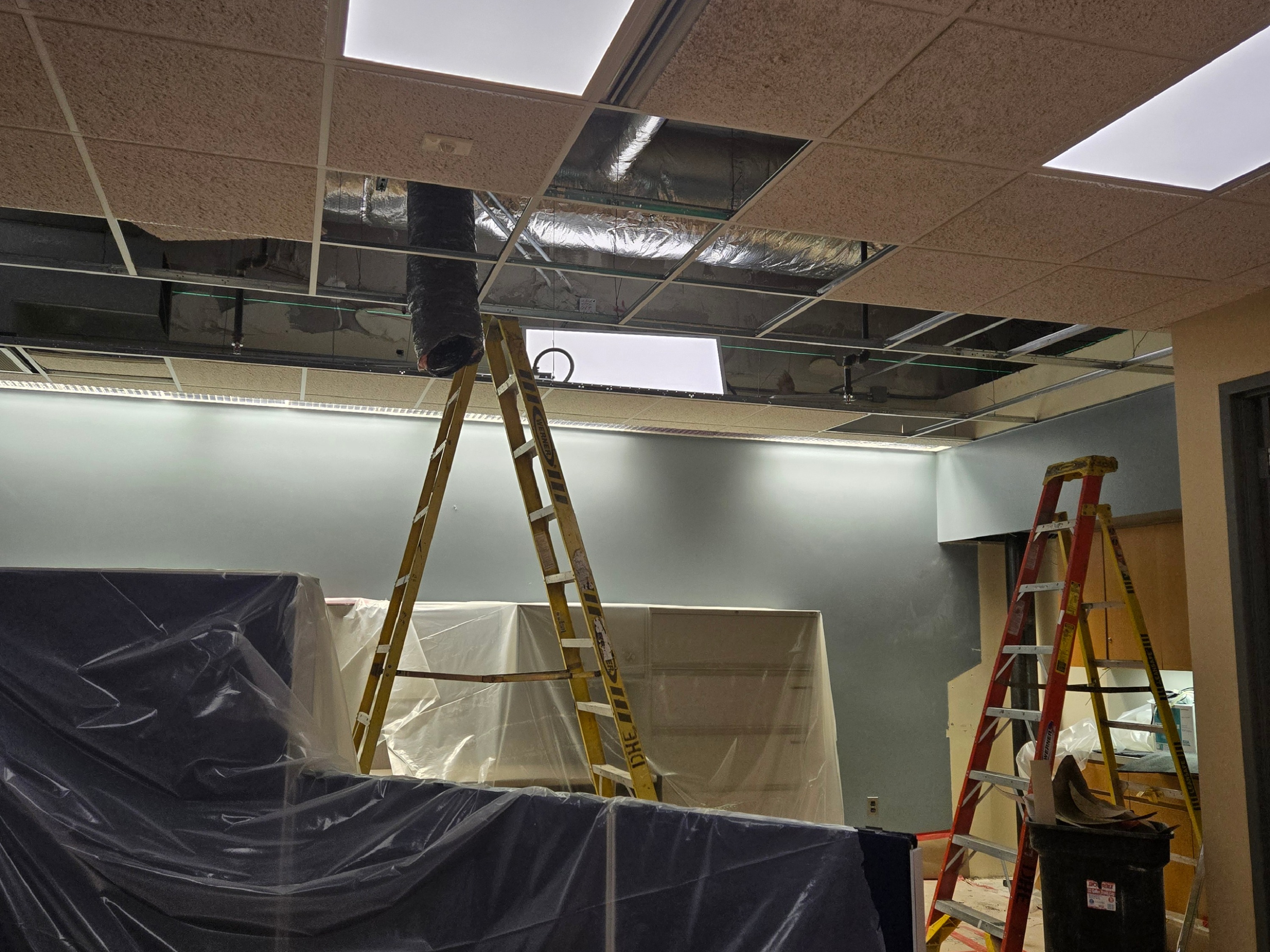
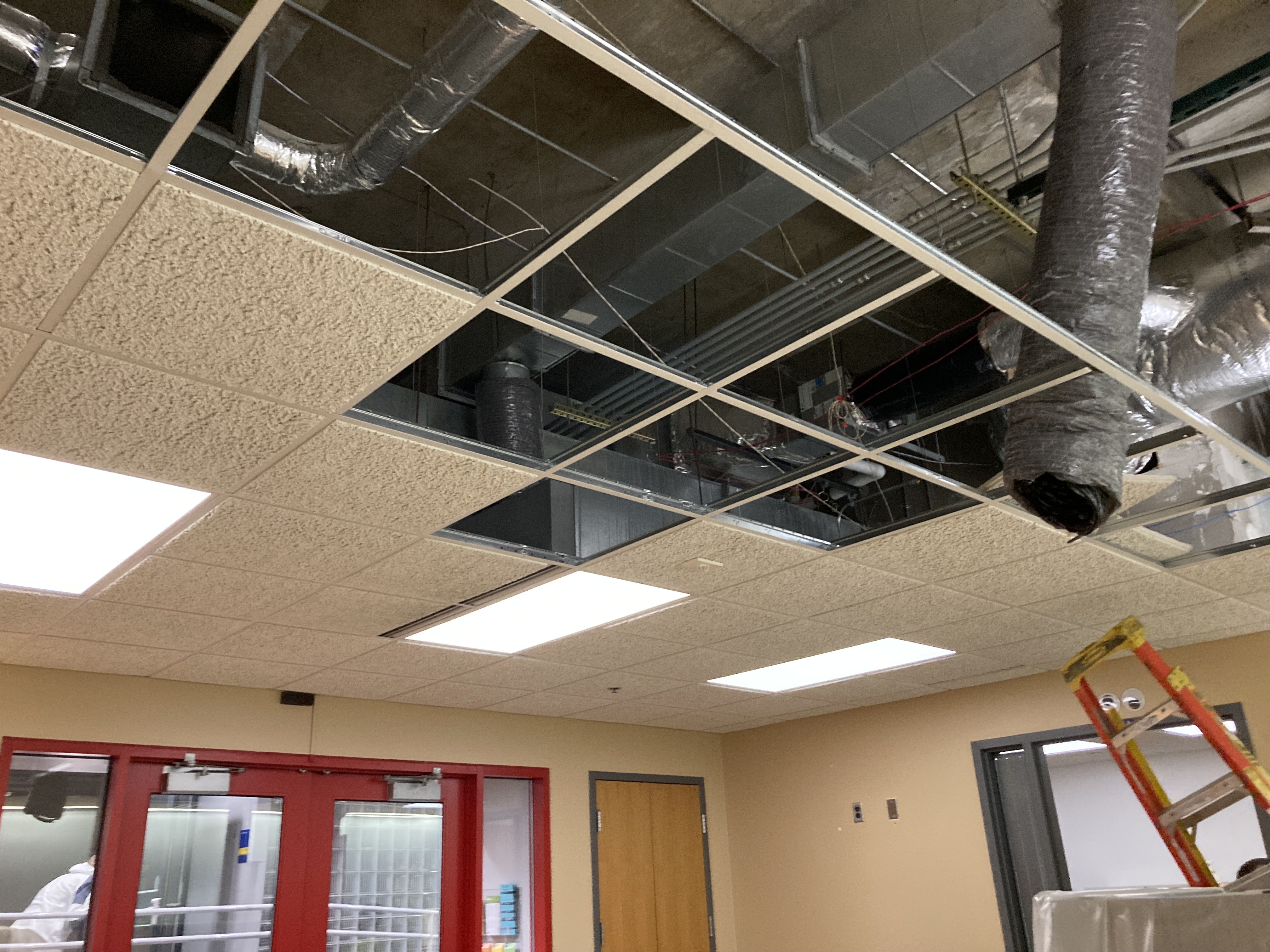
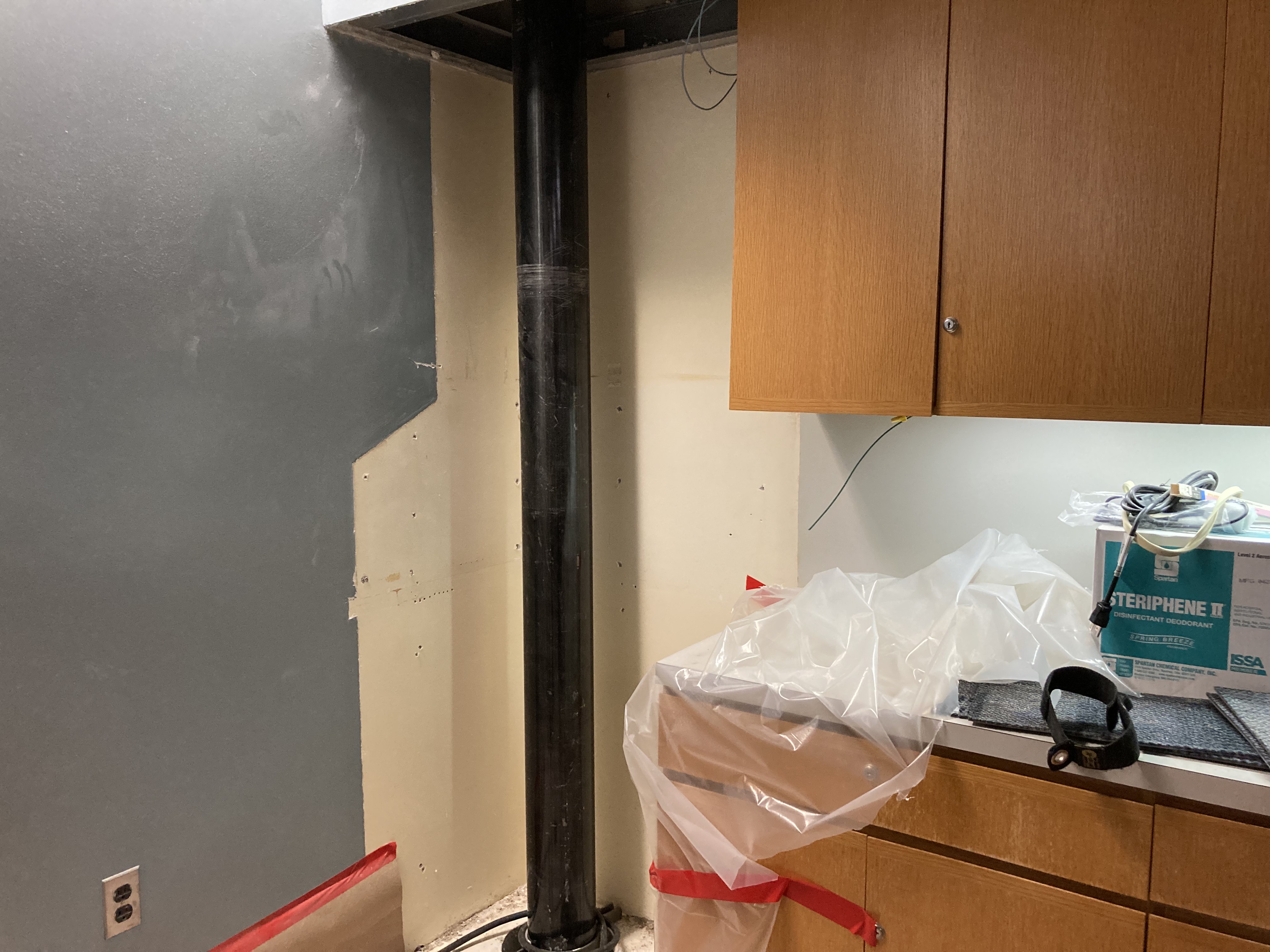
The Dean’s office of Business and Industry vacated their office for a few weeks for the ATC swing chiller project. The piping needed for the new swing chiller ran vertically through their office, from the parking level to the roof. A big thank you to them for making the move during a busy time of the semester! The good news is they are back in their offices before the start of the winter semester.
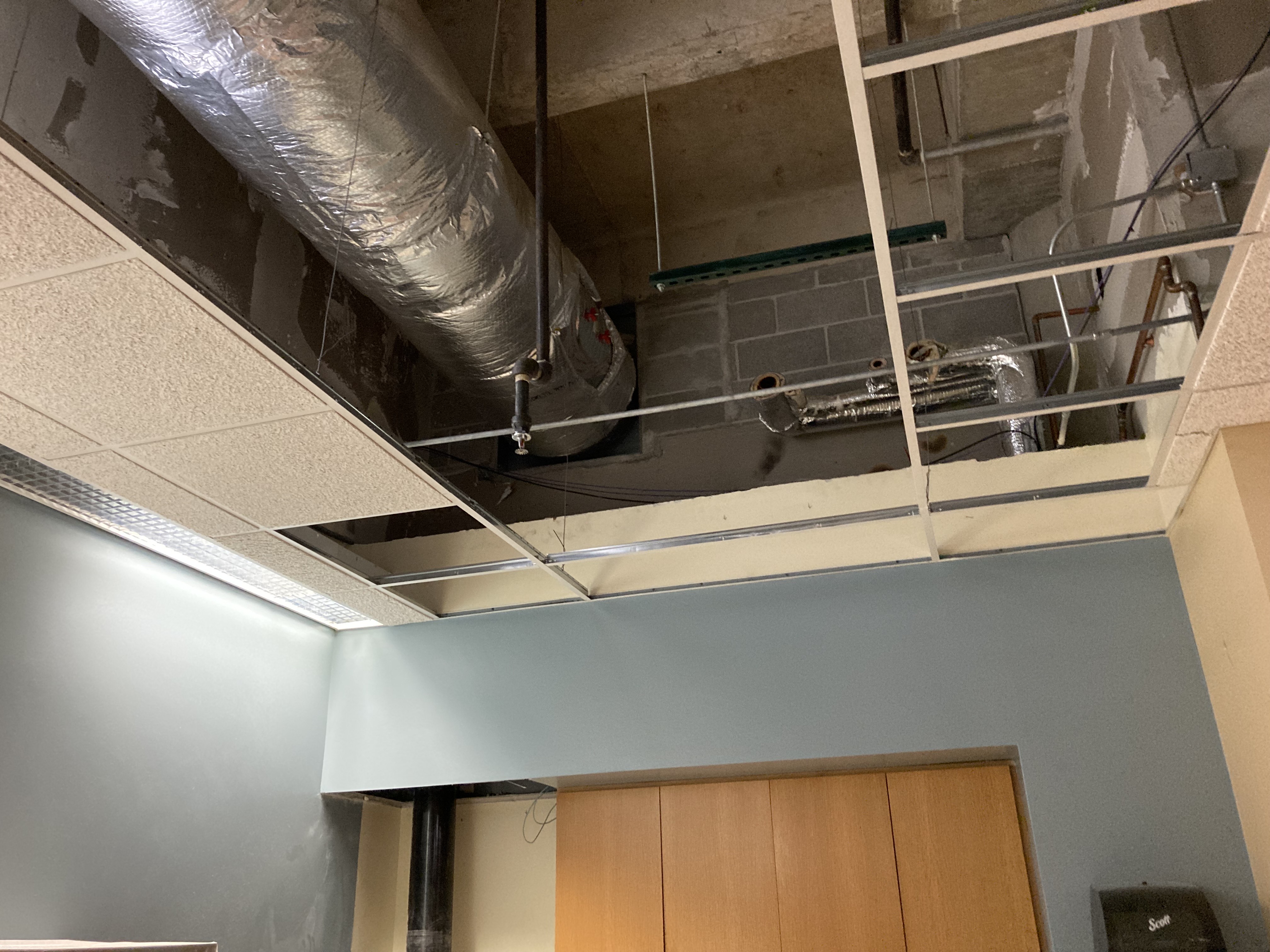
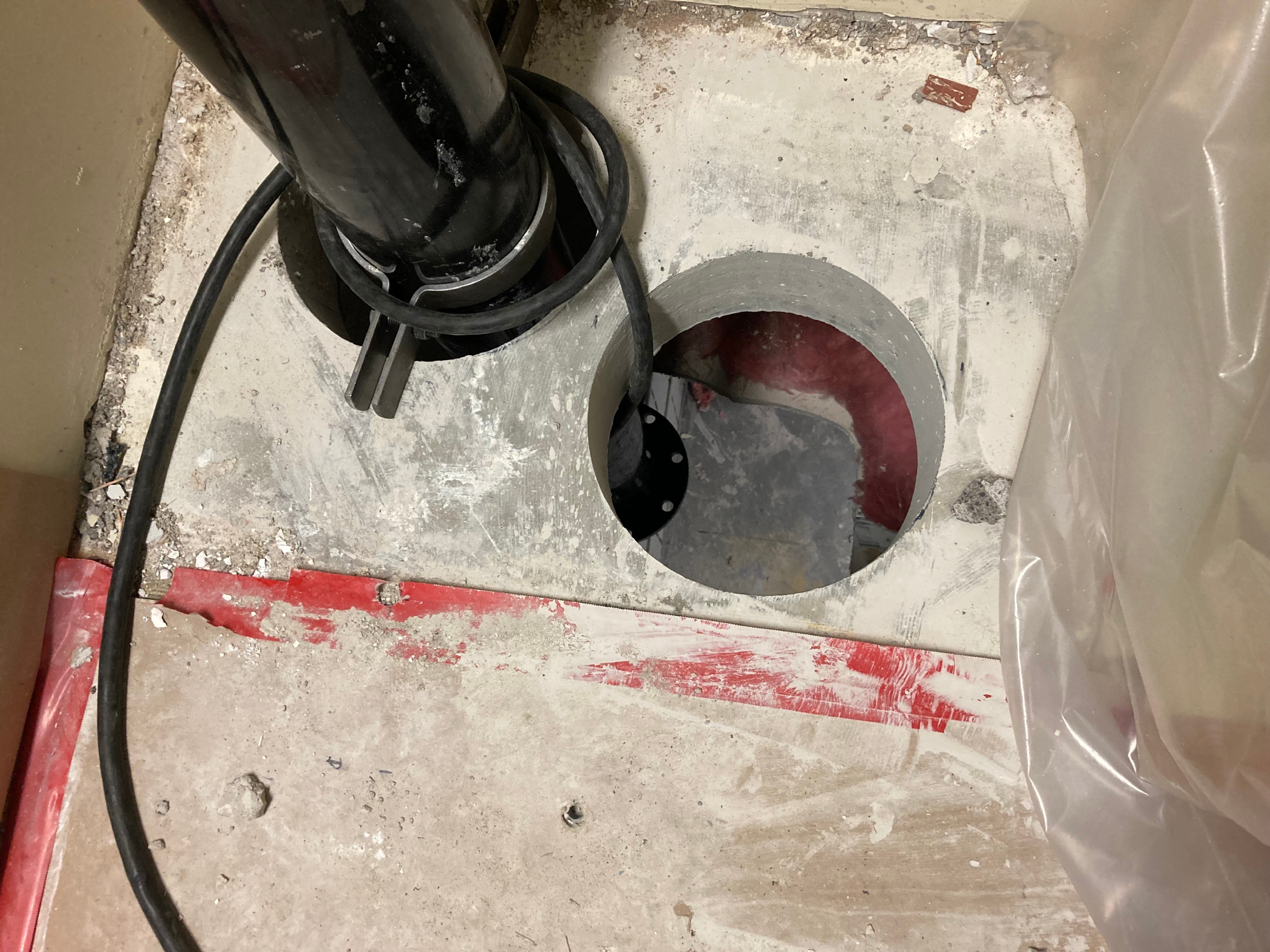
Contractor DHE needed to work in the office space so they could route two new pipes that connect the rooftop unit to the main system piping in the lower-level mechanical room. They had to run the pipes in a different location than the original chase (an enclosed space in a wall used to run pipes, duct work and/or electrical wires) due to the chase size and logistics. They had to modify the kitchenette countertop and move ductwork, electrical and existing piping out of the way to install the new pipes.
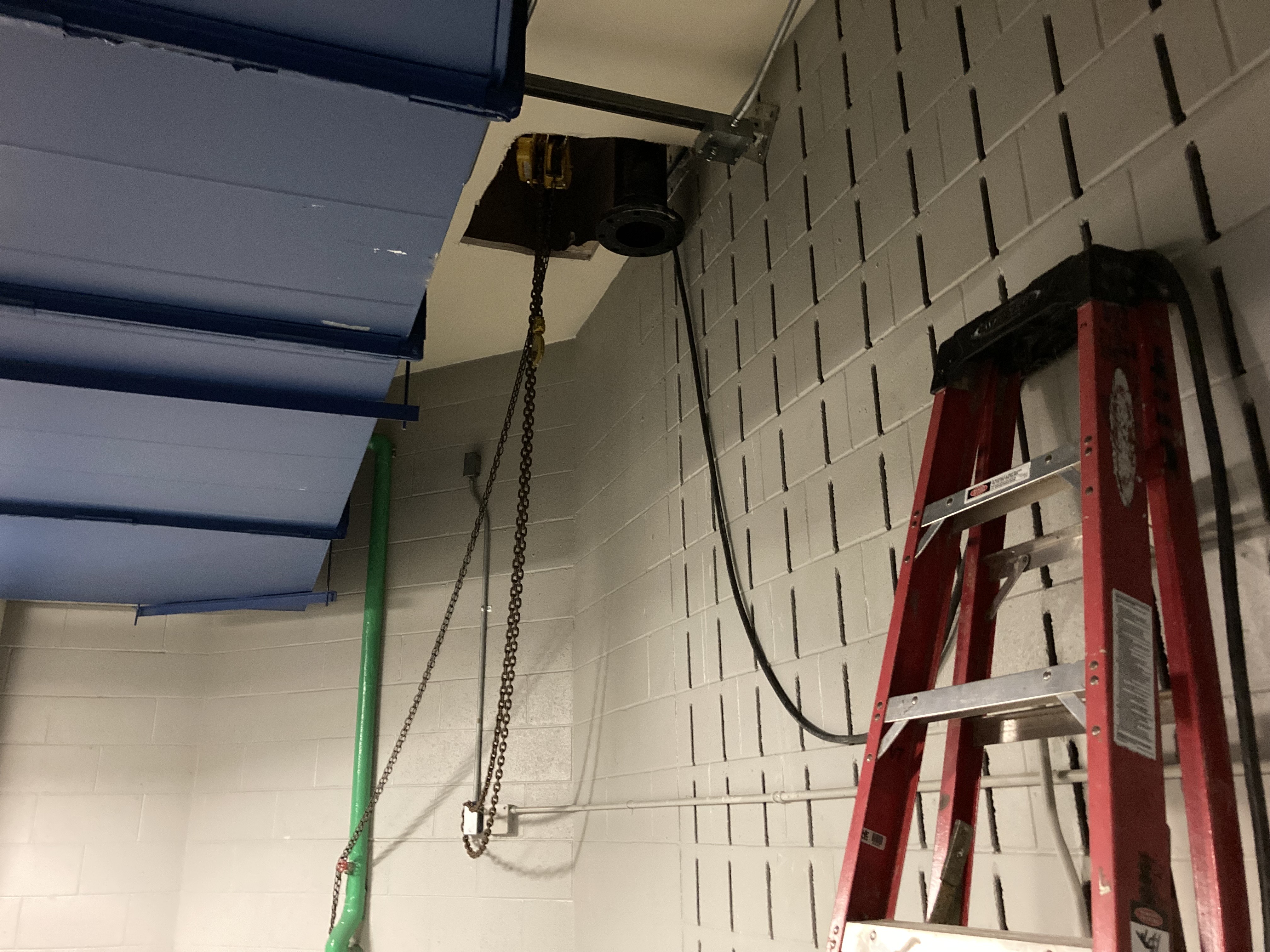
The crews used a duct hoist and pipe cart to get heavy equipment like ducts and pipes into the ceiling and welded the connections to the new unit on the roof. GRCC requires connections to be welded as there is less of a chance for a leak or break. The crews cored holes in the concrete floor and ceiling to make room for the new pipes needed to connect to the lower-level swing chiller. Once the new swing chiller for the mechanical room arrives, they will connect it to the main chiller.
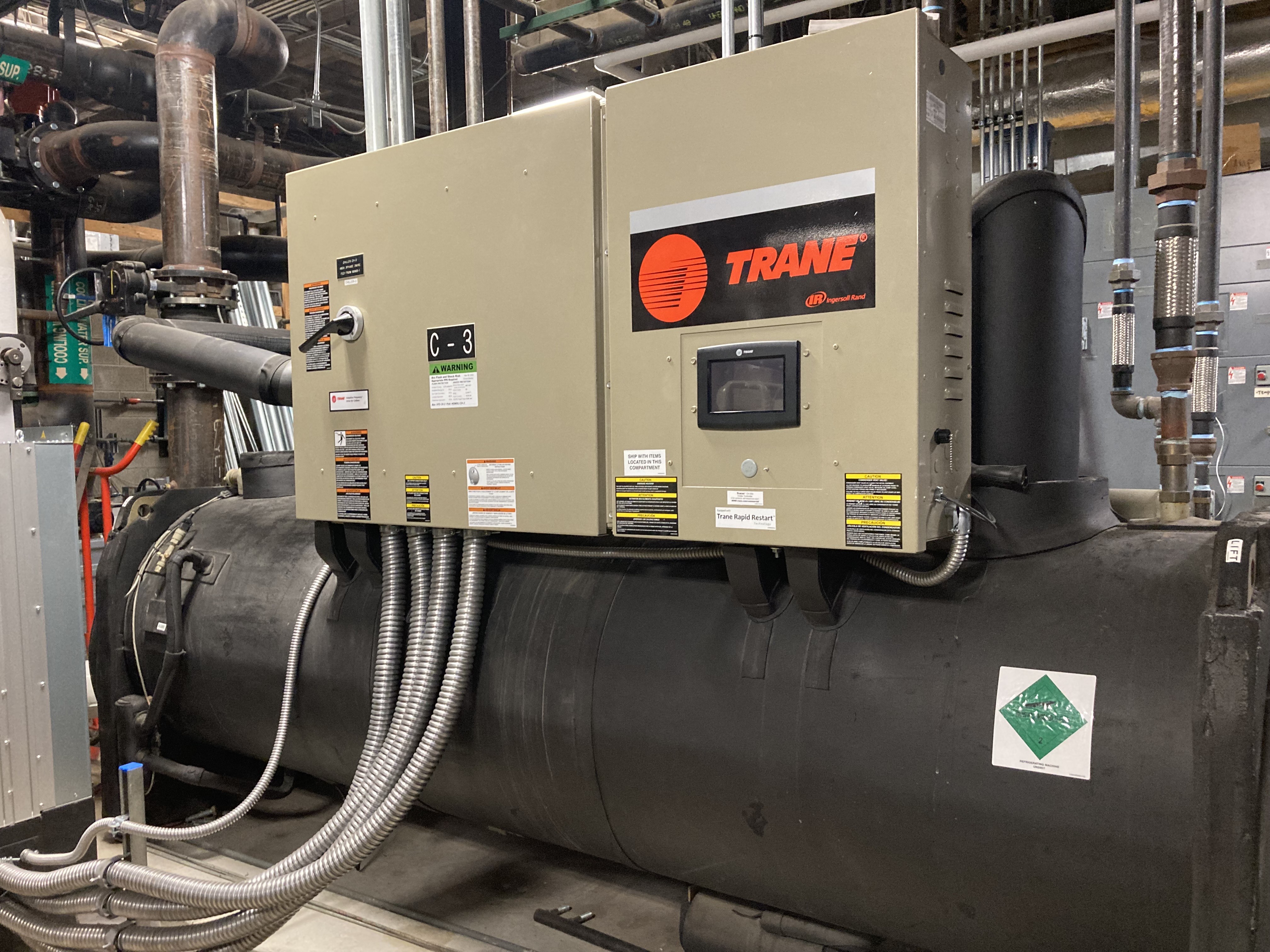
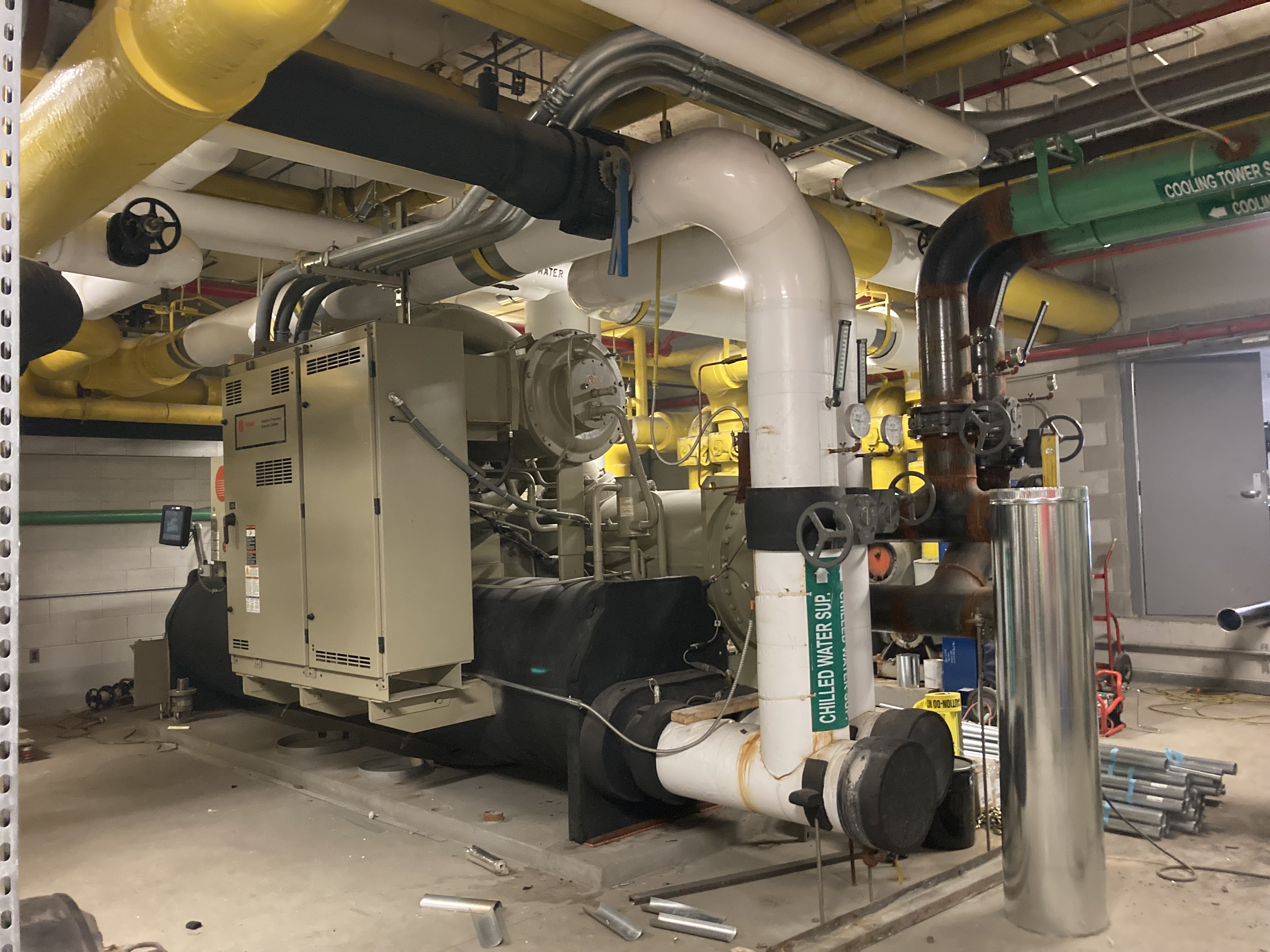
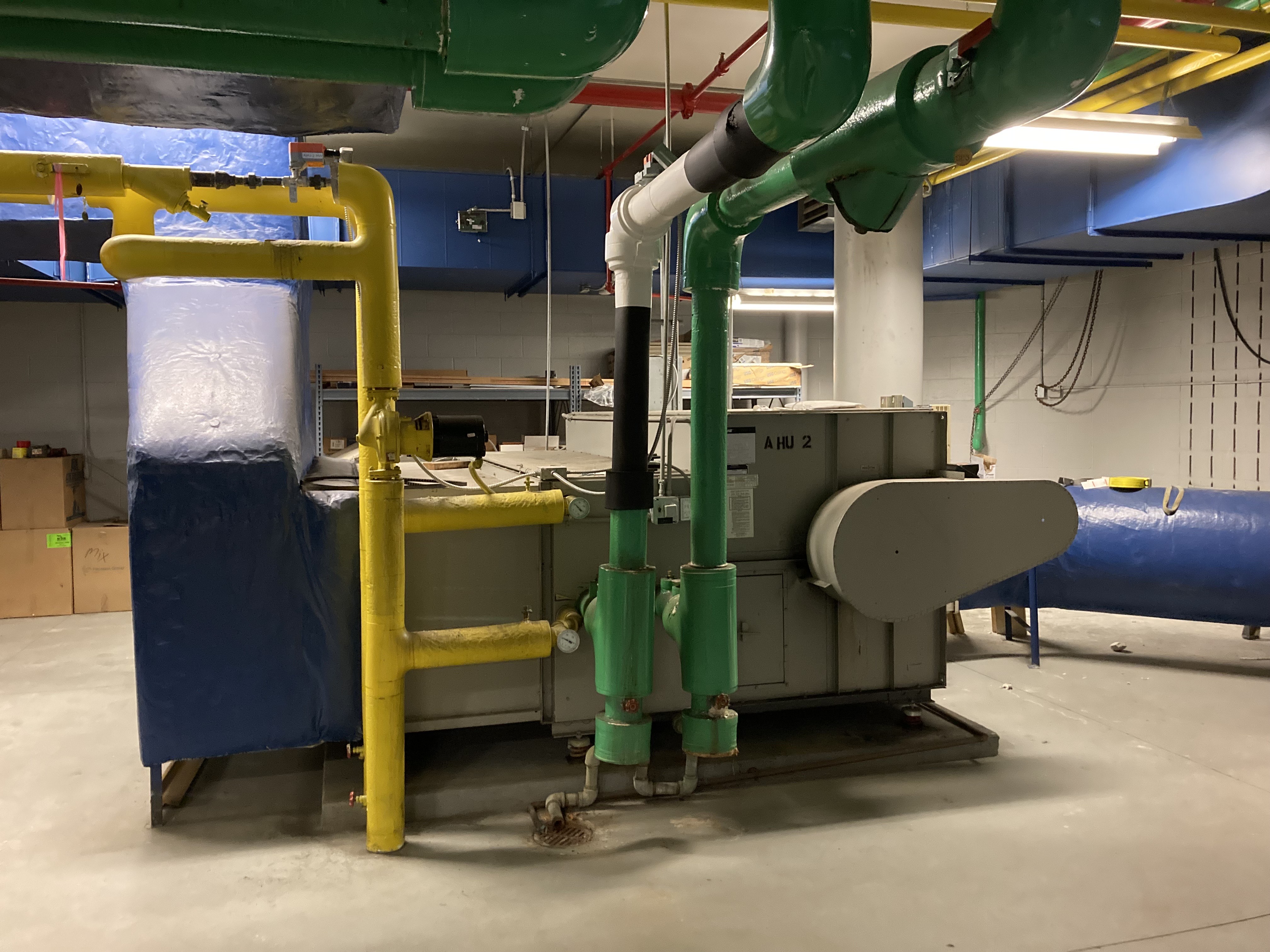
Heating, Ventilation and Air Conditioning (HVAC) equipment is located in two different rooms at the ATC. One room houses the swing chiller (soon to be new swing chiller) and the main chiller. The other room houses the air handler (what you would call a furnace at your house). All the equipment in these rooms are connected to each other and to the rooftop unit. The HVAC components are labeled and the ones in the air handler room are color coded. Blue is for duct work, yellow is for heat, and green is for the chiller, in case you happen to wander by the room and wonder why it is so colorful.
Wes Casarez, Steve Gonzalez, and Kevin Vadeboncoeur are part of GRCC Facilities Skilled Trades and are experts in the HVAC world. Their knowledge about the GRCC HVAC systems, their ability to keep the systems running, troubleshoot and fix breakdowns is invaluable. A big thank you to them for sharing their knowledge for this article.
Stay tuned for the next steps on the ATC Swing Chiller Project.
The Swing Chiller Project Begins
The Wisner-Bottrall Applied Technology Center (ATC) and The Raleigh J. Finkelstein Hall (RJF) are getting new swing chillers! What is a swing chiller? And why do the ATC and RJF need new ones?
Let’s define a chiller first. Mechanical cooling devices called chillers cool the air in many large buildings. A chiller has refrigerant that cools the water. The water then cools the air as it circulates through the building’s air handling system.
What is a swing chiller? A swing chiller is a small chiller that is used during periods of low cooling demand (nights and weekends) to avoid running a large, less efficient full-size chiller at part load. Swing chillers are needed during colder weather when there is less demand for cooling, but buildings still require it (IT rooms, labs). Together, the large and small chillers can more efficiently meet the building's varying cooling needs. Swing chillers can run in conjunction with the main chillers during high demand (hot summer days) to share the load.
Where are swing chillers located? The ATC and RJF swing chiller equipment are located on the roof of each building as well as inside mechanical rooms. Piping connects them from the outside to the inside. Each swing chiller is designed for its specific building. Chillers are air-cooled units that release heat directly into the atmosphere, therefore, rooftop placement provides unobstructed access to ambient air.
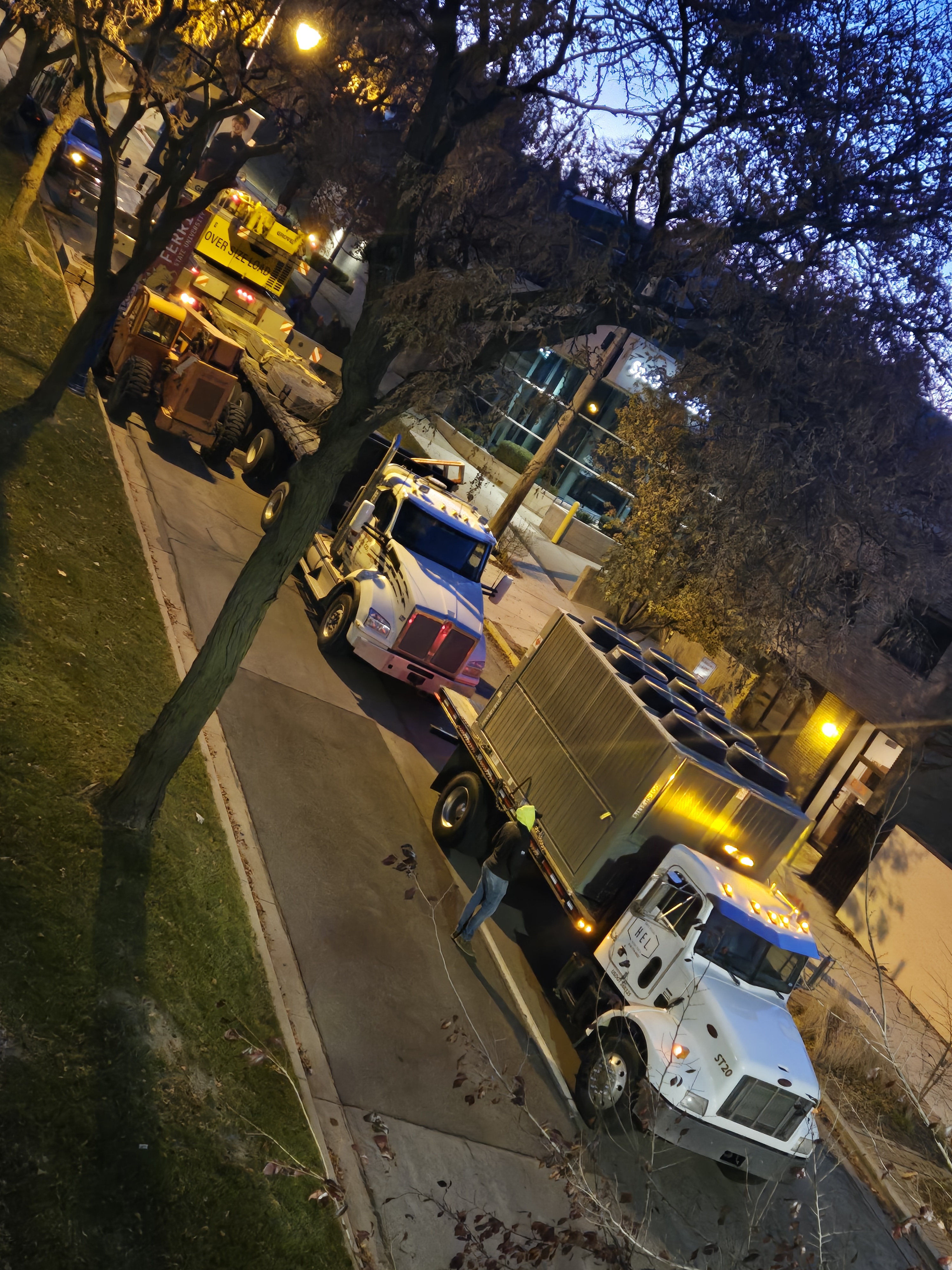
Planning this project took several months. The architect drew up plans and worked with DHE Plumbing and Mechanical, the project’s contractor, and GRCC. The project physically started at the ATC on Monday, Nov. 17, with some roof demolition and work in the mechanical room. This work ensured everything would be ready for the crane lift on Nov. 22.
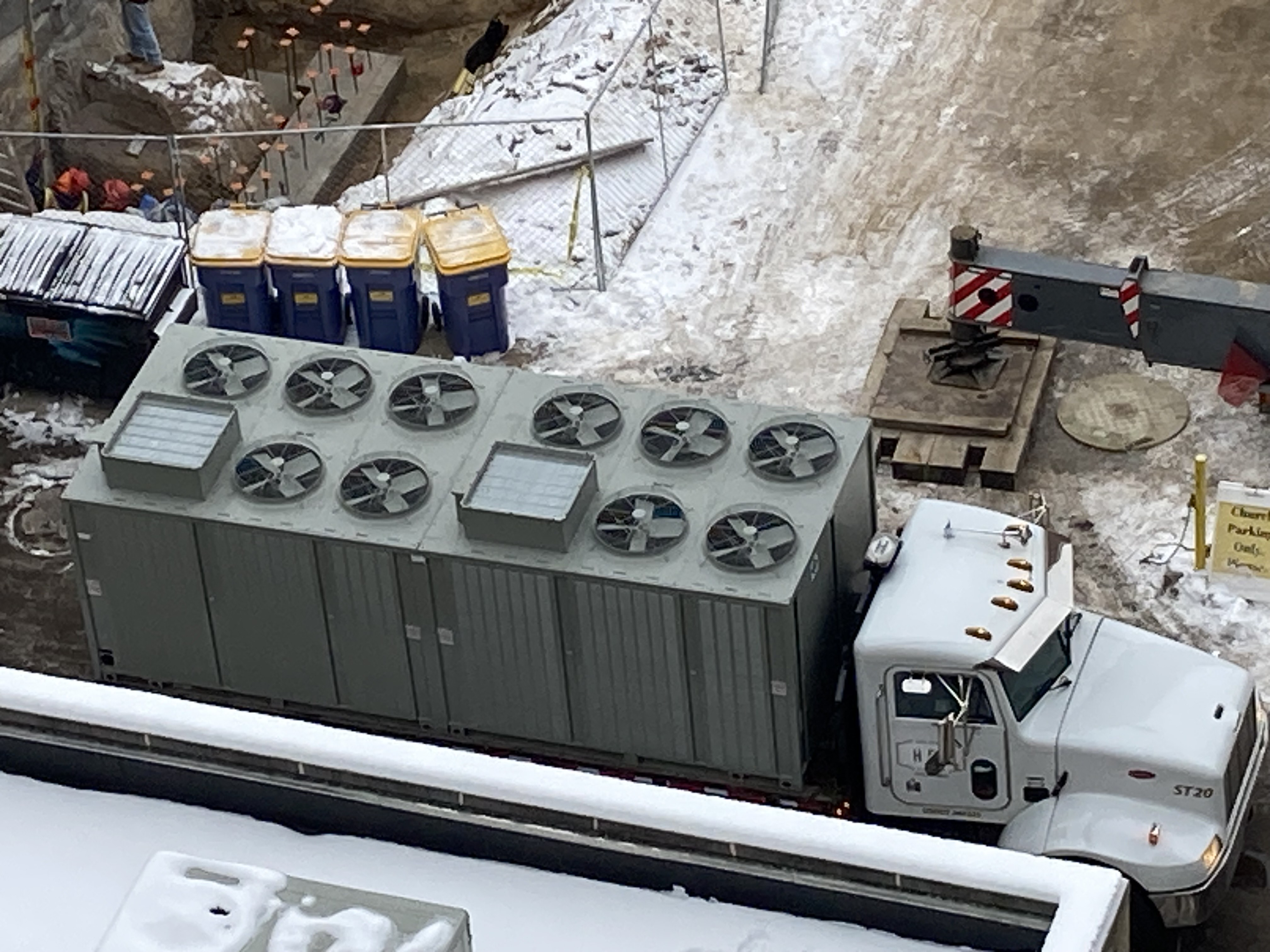
Early Saturday morning, Nov. 22, 2025, with permission from the City of Grand Rapids, Fountain Street was closed. ATC Building Manager Tina Watson, contractor DHE Plumbing and crane company Gelock, were on site for the removal of the old swing chiller and the placement of the new one on the roof of the ATC. It was a successful morning and this part of the ATC project is complete!
ATC and RJF are due for swing chiller replacements due to age, deficiencies, and outdated parts.
Check back soon to learn about the next steps of the ATC chiller replacement.
Related content
Related content
Related content