Cultural Intelligence (CQ), defined by the Cultural Intelligence Center, is the ability to recognize, understand and adapt effectively when interacting with people from different cultural backgrounds. It combines self-awareness, knowledge and practical skills to help individuals communicate respectfully, work collaboratively and respond thoughtfully across differences. CQ is a learnable, research-based capability that supports success in diverse learning and work environments.
Why Cultural Intelligence at GRCC?
At Grand Rapids Community College, this work supports our commitment to fostering a welcoming and effective learning environment for all. As our campus and community continue to evolve, it provides a practical framework for understanding diverse perspectives and engaging thoughtfully with others. It is not about politics or telling people what to think, but about building awareness and skills that help people work and learn well together.
Through participation, individuals gain tools to strengthen collaboration, build trust and lead with adaptability. These skills enhance teamwork, classroom engagement and workplace readiness — supporting both individual growth and institutional success.
Meet Our Certified Facilitators
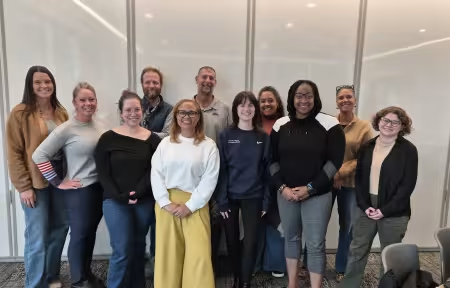
Our 11 trained facilitators represent a wide range of departments and professional backgrounds across campus. Together, they support learning opportunities for faculty, staff and students.
- Alyssa Gamez - Associate Director, Woodrick Center for Inclusion and Multicultural Affairs
- Amy Lyn - Executive Director of TLDE
- Daniel Sullivan - Tutorial Coordinator
- Jamillya Hardley - Director, Woodrick Center for Inclusion and Multicultural Affairs
- Jenny Rood - GRCC PD Officer
- Lydia Cruz - Sr. Talent Acquisition Specialist
- Mariah Shelden - Director, Talent Development
- Melissa Ware - Program Director, Assistant Professor, Counselor
- Morgan Hannah - Promise Zone Associate Director of Student Support
- Ronald Luyk - GRCC Carpenter and CEBA Union President
- Valerie Hargraves - Director of Student Life and Leadership
Training Opportunities
We offer professional development for faculty and staff as well as student centered workshops.
Reach out to us at talent_development@grcc.edu or connect with one of our facilitators to learn more.